


Understanding Variable-frequency drive (VFD) Prices
Market Overview & Supply Chain Dynamics
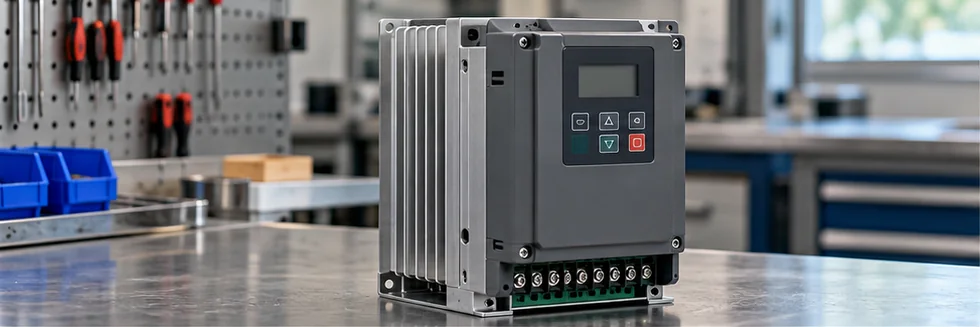
A variable-frequency drive (VFD) rectifies incoming AC power and synthesizes a controlled output for an electric motor. Output current, overload duty, control mode, harmonics, and enclosure rating define the application more precisely than a headline kilowatt size. Semiconductor switches, DC-link components, cooling, controls, and protective functions form the package. Motor insulation, cable length, braking, and electromagnetic compatibility can require additional engineering outside the drive.
Key Applications & Industrial Demand
Pumps, fans, conveyors, machine tools, and process lines use VFDs to regulate speed or torque. Demand depends on automation projects, energy-saving retrofits, motor replacement, and process control. A variable-torque fan duty and a loaded conveyor require different overload and starting behavior.
Key Factors Influencing Variable-Frequency Drive (VFD) Price Movements
- Electrical Duty: Output current, overload duration, input voltage, switching requirements, and control mode establish the converter hardware needed for the motor application.
- Power Quality and Cooling: Harmonics mitigation, filters, braking, enclosure rating, heat dissipation, and ambient derating affect package cost and cabinet requirements.
- Automation Integration: Fieldbus options, safety functions, commissioning tools, programming, motor compatibility, and technical support influence the total control-system investment.
How to Interpret Variable-Frequency Drive (VFD) Pricing Data
Compare per-drive prices at the same input voltage, rated output current, duty cycle, and environmental protection. Keypads, filters, reactors, braking resistors, fieldbus modules, and installation may be separate. The motor's operating requirements and cabinet conditions should determine selection rather than the lowest price per advertised kilowatt.
Further reading: ABB: Low-Voltage AC Drives
Frequently Asked Questions About Variable-frequency drive (VFD)
What drives price changes for Variable-Frequency Drive (VFD)?
Power-semiconductor supply, voltage class, current capacity, overload specification, enclosure, and automation demand influence VFD quotations.
How do quality or specification differences affect Variable-Frequency Drive (VFD) pricing?
Torque control, overload behavior, protection, power quality, cooling, communication, and environmental qualification distinguish drive grades.
Why can local Variable-Frequency Drive (VFD) prices differ from global benchmarks?
Control-panel work, filters, programming, commissioning, taxes, and local service commitments add costs beyond a bare converter.