


Understanding Tropical roundwood Prices
Market Overview & Supply Chain Dynamics
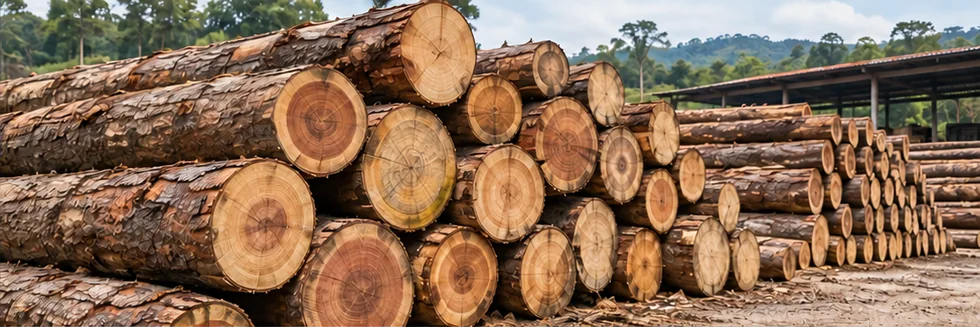
Tropical Roundwood is traded as logs, with species declaration, scaling rule, diameter class, defect allowance, and origin documentation defining the lot. Harvesting and transport supply raw material rather than finished lumber. Two log parcels with identical nominal cubic volume can yield very different boards or veneer because of taper, internal defects, and the receiving mill's technology.
Key Applications & Industrial Demand
Sawmills, veneer peelers, plywood producers, and specialty timber processors buy logs suited to their equipment and products. Large sound logs can support different uses from small or defective material. Buyers also require documentation appropriate to origin, destination, and customer procurement standards.
Key Factors Influencing Tropical Roundwood Price Movements
- Forest and Harvest Supply: Species declaration, accessible harvest areas, seasonality, log size, and origin documentation influence the amount of accepted roundwood entering trade.
- Measured Recovery: Scaling rule, diameter class, taper, defect allowance, and internal condition determine the volume of useful material a processor can recover.
- Heavy-Log Logistics: Forest roads, river or truck access, port handling, storage, freight, and mill demand affect landed log cost and deterioration during transit.
How to Interpret Tropical Roundwood Pricing Data
Logs often trade per cubic meter under an agreed scaling system. Confirm bark treatment, length, diameter, defect deductions, species, and delivery basis. A log-volume price is not directly comparable with sawn-lumber volume because conversion loses bark, sawdust, slabs, and defects.
Further reading: USDA Wood Structure and Conversion Handbook
Frequently Asked Questions About Tropical roundwood
What Drives Price Changes for Tropical Roundwood?
Harvest access, weather, species availability, documentation, mill orders, and freight influence prices. Large sound logs can command premiums even when lower-grade timber is abundant.
How Do Quality or Specification Differences Affect Tropical Roundwood Pricing?
Species, diameter, length, taper, internal defects, decay, moisture history, and scaling terms matter. A visually attractive outside does not guarantee high lumber or veneer recovery.
Why Can Local Tropical Roundwood Prices Differ From Global Benchmarks?
Harvest location, roads, port access, freight, duties, storage, and available processors affect prices. Local conversion technology changes the value of a particular log diameter and quality.