


Understanding Raw bamboo Prices
Market Overview & Supply Chain Dynamics
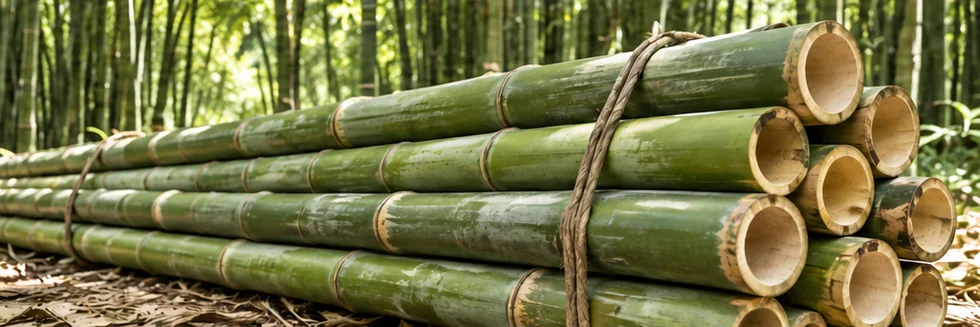
Raw Bamboo is traded as culms whose maturity, culm diameter, wall thickness, moisture condition, and preservation define value. Harvesting, trimming, sorting, and transport supply a variable biological material rather than uniform finished lumber. Nodes, straightness, species, and damage affect conversion recovery. Untreated green culms should be distinguished from dried or preserved material even when sold in the same length class.
Key Applications & Industrial Demand
Furniture, handicrafts, agricultural supports, construction systems where approved, and engineered-bamboo plants use suitable culms. Processors may split, flatten, laminate, or otherwise transform them. The intended product determines acceptable dimensions, species, preservation, and defect levels.
Key Factors Influencing Raw Bamboo Price Movements
- Harvest Specification: Species, maturity, culm diameter, wall thickness, and plantation access affect the amount of usable material recovered from each harvested culm.
- Condition and Durability: Moisture condition, preservation, insect damage, splits, and storage influence whether bamboo can be converted or used in the intended service.
- Conversion Logistics: Straightness, node spacing, sorting, bulky transport, drying, and processor demand determine the landed cost of a suitable raw-bamboo lot.
How to Interpret Raw Bamboo Pricing Data
Raw bamboo may be priced per culm, bundle, ton, or volume. State species, length, diameter, wall, moisture, and treatment. Green weight can include substantial water, while an engineered-bamboo board includes processing and yield losses far beyond the raw culm price.
Further reading: USDA Wood and Related Lignocellulosic Materials Handbook
Frequently Asked Questions About Raw bamboo
What Drives Price Changes for Raw Bamboo?
Harvest access, suitable mature culms, treatment, drying, local processors, and freight influence prices. Demand for straight thick-walled material can create premiums over mixed raw bundles.
How Do Quality or Specification Differences Affect Raw Bamboo Pricing?
Species, maturity, diameter, wall thickness, straightness, splits, pests, moisture, and treatment matter. Length alone does not describe the usable material or durability.
Why Can Local Raw Bamboo Prices Differ From Global Benchmarks?
Plantation distance, handling, long-load transport, treatment facilities, duties, and local conversion demand affect prices. Low-density bulky culms can be expensive to move over long distances.