


Understanding PLC Prices
Market Overview & Supply Chain Dynamics
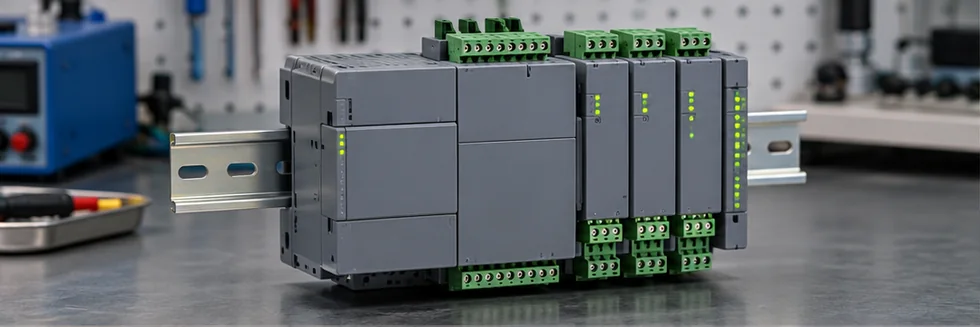
A PLC executes programmed industrial logic while reading sensors and commanding actuators. I/O count, scan time, fieldbus support, memory, and modular expansion determine its control scope. A compact controller and a rack system containing many modules are different purchases. Safety PLC functions require appropriate hardware, engineering, and certification; ordinary automation capability does not establish suitability for a safety-related control task.
Key Applications & Industrial Demand
Machine builders, factories, treatment plants, packaging lines, and process facilities use PLCs for sequenced and continuous automation. Demand follows line investment, modernization, and replacement of approved hardware. Existing software, trained staff, and installed communication networks can make platform compatibility more valuable than a small controller-price saving.
Key Factors Influencing PLC Price Movements
- Control Capacity: I/O count, scan time, program memory, analog precision, and specialized motion functions determine the controller hardware and modules required.
- Architecture and Communication: Modular expansion, fieldbus support, distributed I/O, redundancy, and safety PLC requirements change system scope and qualification needs.
- Engineering Ecosystem: Programming software, installed-platform compatibility, technician familiarity, spare-part access, and migration effort influence the practical cost of adopting a controller.
How to Interpret PLC Pricing Data
PLC quotations may cover only a CPU, a starter kit, or a complete configured rack. Separate I/O modules, power supplies, software licenses, communication adapters, and engineering labor. Compare the required response, environmental rating, supported networks, and lifecycle availability rather than processor speed alone.
Further reading: Siemens: SIMATIC Industrial Automation Systems
Frequently Asked Questions About PLC
What drives price changes for PLC?
Industrial automation orders, CPU and module availability, I/O requirements, network features, and lifecycle support shape PLC purchasing costs.
How do quality or specification differences affect PLC pricing?
Response time, I/O performance, environmental robustness, communication, redundancy, and certified safety functions distinguish controller configurations.
Why can local PLC prices differ from global benchmarks?
Engineering software, panel integration, programming, local spares, technical support, and installation add costs beyond CPU-only quotations.