


Understanding Industrial robots Prices
Market Overview & Supply Chain Dynamics
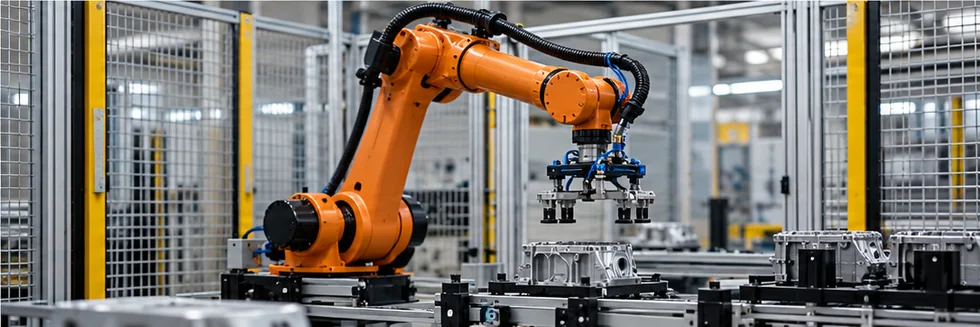
Industrial robots combine a programmable manipulator, controller, drives, and application software. Payload, reach, repeatability, and the required end effector determine whether a robot can perform a task. Arm price excludes much of a working cell: tooling, part presentation, vision, guarding, programming, and safety integration are frequently substantial. Collaborative operation also depends on the complete application and risk assessment, not a label on the arm.
Key Applications & Industrial Demand
Welding, palletizing, painting, assembly, machine tending, and inspection use different robot configurations. Demand rises where production volumes, labor constraints, consistency, or hazardous tasks justify automation. Cycle time, available floor space, workpiece variability, and maintenance access influence the selected cell design.
Key Factors Influencing Industrial Robots Price Movements
- Arm Geometry: Payload, reach, axis arrangement, mounting, speed, and repeatability define the manipulator's suitability for handling, welding, or precision assembly.
- Application Equipment: End effector design, vision, force sensing, part feeders, cables, and process equipment determine how much task-specific hardware accompanies the robot.
- Cell Engineering: Safety integration, programming, fixtures, line synchronization, commissioning, and technical support can outweigh differences between basic robot-arm prices.
How to Interpret Industrial Robots Pricing Data
Compare a bare arm-and-controller package with other packages of the same scope. Rated payload should include grippers, cables, and workpiece mass, while reach must cover the actual path. Integration engineering, commissioning, programming, tooling changes, and uptime support determine total project economics beyond the robot's purchase invoice.
Further reading: ABB: Industrial Robots
Frequently Asked Questions About Industrial robots
What drives price changes for Industrial Robots?
Manipulator size, controller capabilities, tooling, sensing, integration effort, and manufacturing automation demand shape robot-cell prices.
How do quality or specification differences affect Industrial Robots pricing?
Payload, reach, speed, repeatability, environmental protection, process software, and uptime support determine industrial robot capability.
Why can local Industrial Robots prices differ from global benchmarks?
Local integration labor, guarding, tooling, commissioning, taxes, training, and service response add costs beyond an arm-and-controller export package.