


Understanding Industrial chiller Prices
Market Overview & Supply Chain Dynamics
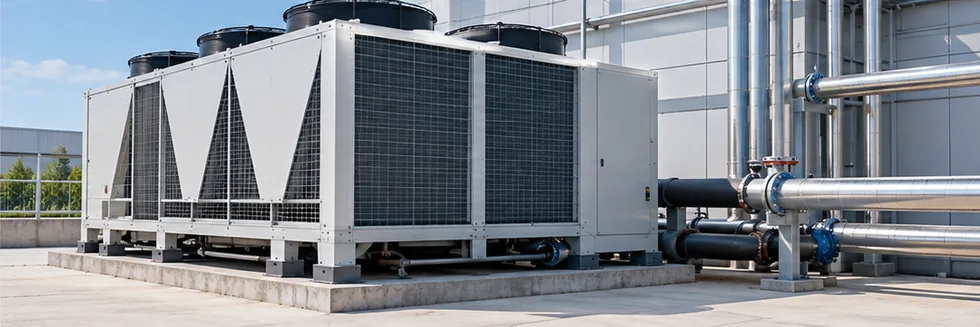
An industrial chiller removes process heat through a refrigerant circuit and a liquid heat exchanger. Cooling duty, leaving temperature, process flow, and ambient conditions define the design point. Air-cooled and water-cooled systems require different site infrastructure, while glycol mixtures alter fluid properties and freezing protection. Compressor staging, heat-exchanger materials, controls, pumps, and reservoirs distinguish complete process packages from refrigeration equipment alone.
Key Applications & Industrial Demand
Injection molding, laser cutting, food production, chemical processing, and precision manufacturing use chillers to stabilize temperatures. Purchasers need dependable cooling at the actual process conditions, sometimes with redundancy or tight temperature control. A nominal refrigeration capacity cannot substitute for a verified performance point at the required outlet temperature.
Key Factors Influencing Industrial Chiller Price Movements
- Temperature Duty: Cooling duty, leaving temperature, ambient conditions, and glycol concentration determine compressor loading and achievable refrigeration output.
- Heat-Rejection Design: Air-cooled construction, water-cooled condensers, heat-exchanger materials, and fan or water-system requirements change equipment and site costs.
- Process Reliability: Process flow, temperature stability, staged compressors, redundancy, alarms, and included pumping equipment affect suitability for continuous manufacturing.
How to Interpret Industrial Chiller Pricing Data
Quotes may use cooling kilowatts, refrigeration tons, or price per complete package. Translate capacity only at the stated temperature conditions. Identify pumps, tank, glycol compatibility, controls, condenser arrangement, and commissioning scope. Piping, heat rejection, electricity, and maintenance access determine much of the installed cost.
Further reading: Carrier: Air-Cooled and Water-Cooled Chillers
Frequently Asked Questions About Industrial chiller
What drives price changes for Industrial Chiller?
Required cooling conditions, compressor selection, heat exchangers, control precision, and included pump or reservoir equipment shape chiller quotations.
How do quality or specification differences affect Industrial Chiller pricing?
Temperature stability, rated-condition capacity, corrosion resistance, energy performance, and redundancy distinguish industrial cooling packages.
Why can local Industrial Chiller prices differ from global benchmarks?
Piping, heat rejection, electrical work, transport, glycol filling, commissioning, and maintenance coverage add site-dependent expenses.