


Understanding Wood chips for pulp production Prices
Market Overview & Supply Chain Dynamics
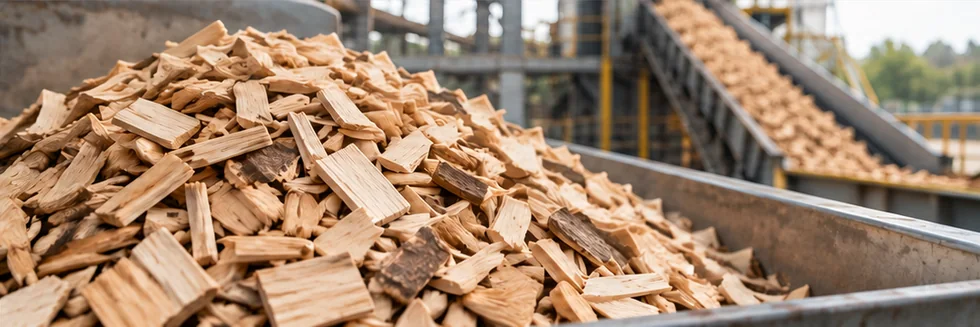
Wood Chips for Pulp Production are controlled fragments from roundwood or sawmill residues. Species mix, chip dimensions, bark content, dry mass, and decay determine pulp-mill value. Screening removes oversize pieces and fines, while storage protects fiber condition. A wet ton of chips is not equivalent to a dry ton of wood, and fuel chips may fail a pulp mill's sizing or cleanliness requirements.
Key Applications & Industrial Demand
Chemical and mechanical pulp mills consume chips chosen for fiber properties and process behavior. Uniform chips help cooking, while different hardwood and softwood mixtures support different paper products. Contamination with soil, metal, or unsuitable wood can disrupt processing.
Key Factors Influencing Wood Chips for Pulp Production Price Movements
- Fiber Resource: Species mix, forestry output, sawmill residues, harvest access, and competing wood uses influence the availability of suitable pulping feedstock.
- Chip Quality: Chip dimensions, bark content, fines, contamination, and decay affect cooking uniformity, fiber recovery, and chemical or screening costs.
- Payable Wood Quantity: Dry mass, moisture measurement, storage losses, vessel loading, and freight determine the cost of usable wood delivered to a pulp mill.
How to Interpret Wood Chips for Pulp Production Pricing Data
Chips can trade by green ton, bone-dry ton, or a stated dry-weight convention. Align moisture measurement, species, bark, sizing, and loading basis. A low wet-weight offer can deliver less fiber, while pulp prices include substantial conversion beyond chip supply.
Further reading: USDA Wood Fiber and Processing Handbook
Frequently Asked Questions About Wood chips for pulp production
What Drives Price Changes for Wood Chips for Pulp Production?
Forestry supply, sawmill activity, pulp-mill runs, competing biomass demand, and freight influence prices. Species-specific shortages can matter even when other wood residues are abundant.
How Do Quality or Specification Differences Affect Wood Chips for Pulp Production Pricing?
Species, moisture, dimensions, bark, fines, decay, and contaminants matter. Uniform clean chips may yield more acceptable pulp than irregular low-cost feedstock.
Why Can Local Wood Chips for Pulp Production Prices Differ From Global Benchmarks?
Forest distance, chipping capacity, port handling, storage, ocean freight, duties, and mill location affect prices. Dry-weight conventions can also change apparent comparisons.