


Understanding Wood chips for energy Prices
Market Overview & Supply Chain Dynamics
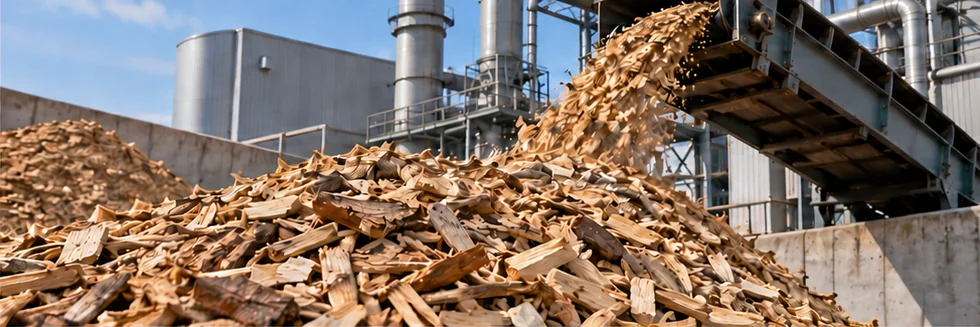
Wood Chips for Energy are produced from logs, residues, or suitable recovered wood and delivered as a bulky biomass fuel. As-received moisture determines how much dry matter a truck carries. Chip size and bark fraction affect fuel feeding and ash behavior, while storage heating requires operational attention. Untreated forest chips and contaminated recovered material are different commercial fuels.
Key Applications & Industrial Demand
Biomass boilers and heat plants consume chips where local wood supply and suitable handling systems make them economical. Because wet chips are bulky, consuming plants are often sensitive to haul distance and the cost of moving water with the fuel.
Key Factors Influencing Wood Chips for Energy Price Movements
- Water and Dry Biomass: As-received moisture and dry matter determine delivered energy, drying losses, and the amount of useful fuel per transport load.
- Handling Quality: Chip size, bark fraction, contaminants, and oversize material influence conveyor reliability, combustion, and ash removal.
- Local Supply Radius: Harvesting, chipping, haul distance, covered storage, and storage heating risk shape the delivered economics of this bulky fuel.
How to Interpret Wood Chips for Energy Pricing Data
Clarify whether prices are per wet ton, dry ton, loose cubic meter, or delivered energy. Measure moisture consistently and state chip-size requirements. A low wet-ton quotation may provide less usable heat than a drier, apparently more expensive shipment.
Further reading: EIA: Biomass Fuels
Frequently Asked Questions About Wood chips for energy
What drives price changes for Wood Chips for Energy?
Harvest activity, residue availability, chipping costs, moisture, haul distance, and local boiler demand influence chip prices.
How do quality or specification differences affect Wood Chips for Energy pricing?
Moisture, particle size, bark, contamination, and dry-matter content determine usable energy and compatibility with fuel-handling equipment.
Why can local Wood Chips for Energy prices differ from global benchmarks?
Low bulk density and water content make transport expensive. Nearby forestry, competing fiber demand, and storage conditions dominate local fuel economics.