


Understanding Welded steel pipes Prices
Market Overview & Supply Chain Dynamics
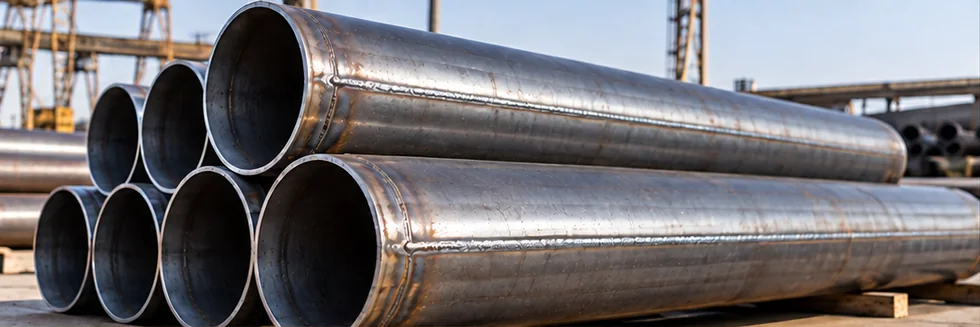
Welded Steel Pipes are formed from strip or plate and joined along a weld seam. Outside diameter, wall thickness, hydrostatic testing, and seam inspection identify commercially distinct products. ERW, spiral, and longitudinal submerged-arc processes serve different dimensions and applications. Structural tubing and pressure-service pipe also require different standards, so the word welded does not establish an acceptable end use.
Key Applications & Industrial Demand
Water systems, construction, mechanical fabrication, energy projects, and industrial piping use suitable welded products. Buyers specify pressure, corrosion protection, geometry, and joining requirements. A tube qualified for a frame should not automatically be substituted into a pressure line.
Key Factors Influencing Welded Steel Pipes Price Movements
- Strip and Plate Inputs: Hot-rolled coil or plate costs, forming dimensions, and welding-line capacity influence manufacturing economics for each pipe category.
- Service Qualification: Wall thickness, hydrostatic testing, seam inspection, and the material standard determine acceptance for structural, fluid, or pressure applications.
- Finishing and Connections: Outside diameter, coatings, end preparation, threads, flanges, and cut lengths influence installation compatibility and the delivered value of a pipe lot.
How to Interpret Welded Steel Pipes Pricing Data
Pipes may be quoted per ton, meter, or piece. Align diameter, wall, grade, weld process, standard, and coating before converting price bases. A cheaper meter can contain thinner steel or exclude testing, end finishing, and protective treatment.
Further reading: AISI Steel Production and Product Processing
Frequently Asked Questions About Welded steel pipes
What Drives Price Changes for Welded Steel Pipes?
Flat-steel costs, pipe-mill utilization, infrastructure orders, and energy-project demand influence prices. Large-diameter or tightly tested products may face distinct capacity constraints.
How Do Quality or Specification Differences Affect Welded Steel Pipes Pricing?
Diameter, wall tolerance, weld quality, grade, inspection, coatings, and end preparation matter. Similar dimensions do not guarantee equal pressure or structural suitability.
Why Can Local Welded Steel Pipes Prices Differ From Global Benchmarks?
Bulky freight, local coating, testing, duties, stock lengths, and installation schedules affect prices. Transport and finishing can dominate a remote project's delivered pipe cost.