
Price CloudO3GLOBAL COMMODITY MARKETS
English (US) Language
Vessel environmental fee icon
PORTS AND MARITIME SERVICES · SOURCES REPORT DIFFERENT PRICE TYPES

Vessel Environmental Fee Latest Prices

Vessel Environmental Fee prices depend on local levy scope, vessel category, waste contributions, tonnage, incentives, and eligibility documentation.

Download history CSV ↓
Price series · 4

Price series — Vessel environmental fee

Sources report different price types Sources may update at different intervals

Exact item match: 4Related benchmark: 0Within recorded date window: 4Outside date range: 0No latest observation: 0Live reference: 0
Clear filters
Showing 1–4 of 4 Price seriesPage 1 / 1
Price series Vessel environmental fee
Provider / SourceCountry / market / CurrencyLatest priceObserved date / published periodFrequencyMappingStatusSource
Port of Rotterdam Authority buoy and wastePhí môi trường tàu2026_seagoing_mandatory_waste_fee|cruisePort of Rotterdam Authority buoy and waste NL · Port of RotterdamEUR / vessel call mandatory waste fee maximum 3,500.00EUR / vessel call mandatory waste fee maximum 11/19/2026First recorded (UTC)Last recorded by crawler: 2026-01-01 – 2027-01-01 Published tariff maximumCurrent tariff · Published period
Series detailsFreight calculation: min(fixed_component_plus_GT_times_variable_component,applicable_noncruise_or_cruise_maximum_component)_before_eligible_rebatesRate component: maximum_cruiseIncurrence: whether_or_not_waste_actually_delivered_Article17_exemptions_Article20_applyRebates: eligible_GreenAward_and_shortsea_line_service_rebates_separate_no_discount_treated_as_priceRate schedule: Rotterdam_2026_mandatory_seagoing_waste_feePublished price, not a recorded transactionOriginal currency and unitCoverage limited to the listed source and market
Exact item match Within recorded date window Source ↗History
Port of Rotterdam Authority buoy and wastePhí môi trường tàu2026_seagoing_mandatory_waste_fee|capPort of Rotterdam Authority buoy and waste NL · Port of RotterdamEUR / vessel call mandatory waste fee maximum 2,000.00EUR / vessel call mandatory waste fee maximum 11/19/2026First recorded (UTC)Last recorded by crawler: 2026-01-01 – 2027-01-01 Published tariff maximumCurrent tariff · Published period
Series detailsFreight calculation: min(fixed_component_plus_GT_times_variable_component,applicable_noncruise_or_cruise_maximum_component)_before_eligible_rebatesRate component: maximum_noncruiseIncurrence: whether_or_not_waste_actually_delivered_Article17_exemptions_Article20_applyRebates: eligible_GreenAward_and_shortsea_line_service_rebates_separate_no_discount_treated_as_priceRate schedule: Rotterdam_2026_mandatory_seagoing_waste_feePublished price, not a recorded transactionOriginal currency and unitCoverage limited to the listed source and market
Exact item match Within recorded date window Source ↗History
Port of Rotterdam Authority buoy and wastePhí môi trường tàu2026_seagoing_mandatory_waste_fee|gtPort of Rotterdam Authority buoy and waste NL · Port of RotterdamEUR / GT mandatory vessel waste fee variable component 0.05EUR / GT mandatory vessel waste fee variable component 11/19/2026First recorded (UTC)Last recorded by crawler: 2026-01-01 – 2027-01-01 Published tariff componentCurrent tariff · Published period
Series detailsFreight calculation: min(fixed_component_plus_GT_times_variable_component,applicable_noncruise_or_cruise_maximum_component)_before_eligible_rebatesRate component: variable_per_GTIncurrence: whether_or_not_waste_actually_delivered_Article17_exemptions_Article20_applyRebates: eligible_GreenAward_and_shortsea_line_service_rebates_separate_no_discount_treated_as_priceRate schedule: Rotterdam_2026_mandatory_seagoing_waste_feePublished price, not a recorded transactionOriginal currency and unitCoverage limited to the listed source and market
Exact item match Within recorded date window Source ↗History
Port of Rotterdam Authority buoy and wastePhí môi trường tàu2026_seagoing_mandatory_waste_fee|fixedPort of Rotterdam Authority buoy and waste NL · Port of RotterdamEUR / vessel call mandatory waste fee fixed component 220.00EUR / vessel call mandatory waste fee fixed component 11/19/2026First recorded (UTC)Last recorded by crawler: 2026-01-01 – 2027-01-01 Published tariff componentCurrent tariff · Published period
Series detailsFreight calculation: min(fixed_component_plus_GT_times_variable_component,applicable_noncruise_or_cruise_maximum_component)_before_eligible_rebatesRate component: fixed_per_shipIncurrence: whether_or_not_waste_actually_delivered_Article17_exemptions_Article20_applyRebates: eligible_GreenAward_and_shortsea_line_service_rebates_separate_no_discount_treated_as_priceRate schedule: Rotterdam_2026_mandatory_seagoing_waste_feePublished price, not a recorded transactionOriginal currency and unitCoverage limited to the listed source and market
Exact item match Within recorded date window Source ↗History

Price history

Each source has its own currency and unit · Sources may update at different intervals
No data in this range. View full history →

Historical price table

Actual publication periods; missing periods are not interpolated
0 records
Price history Vessel environmental fee — Each source has its own currency and unit
PeriodPrice (Each source has its own currency and unit)Source
No records in this range.

Definition: A vessel-related levy or charge defined by a port's environmental or waste-reception policy.

Key Specifications and Terms:

Understanding Vessel environmental fee Prices
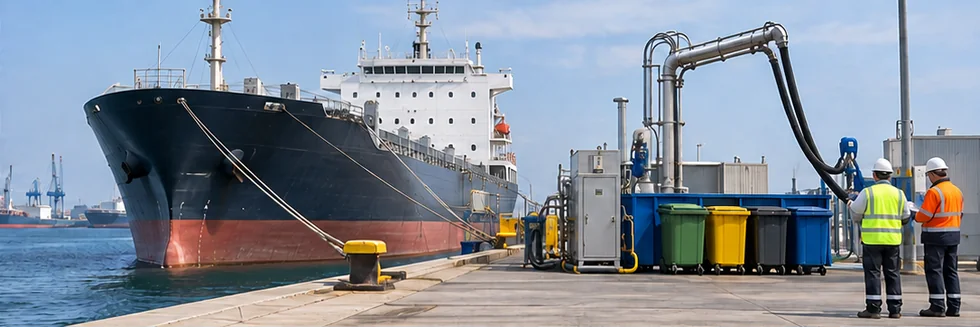
Vessel and port environmental reception equipment, illustrative image
Illustrative image for the Vessel Environmental Fee market guide.

Market Overview & Supply Chain Dynamics

A vessel environmental fee is a local schedule item whose purpose and scope must be read precisely. Environmental incentive rules, vessel category, waste contribution, gross tonnage, and eligibility evidence can affect liability. Some schedules fund waste systems or provide performance-related reductions; others use different environmental mechanisms. The label does not establish a universal charge per emission tonne or a carbon-credit purchase.

Key Applications & Industrial Demand

Shipowners, operators, charterers, and agents account for environmental port charges in voyage disbursements. Demand follows calls at the relevant port and the vessel's applicable classification. Fleet environmental performance may affect eligibility for incentives, while ordinary collection work can still require separately booked services.

Key Factors Influencing Vessel Environmental Fee Price Movements

  • Levy Scope: Waste contribution, environmental incentive design, vessel category, and covered facility services determine what the schedule assesses.
  • Vessel Assessment: Gross tonnage, call characteristics, activity, minimums, and published exemptions influence the amount applicable to a particular ship.
  • Evidence and Inclusions: Eligibility evidence, verified ratings, declared information, actual waste reception, and tax treatment can alter the final port invoice.

How to Interpret Vessel Environmental Fee Pricing Data

Separate the published environmental component from carbon allowances, actual waste pickups, and ordinary port dues. Apply the port's vessel and call basis, then assess any documented discount. Compare the same service and vessel class across ports; a broad environmental label can conceal fundamentally different funding and service arrangements.

Further reading: Port of Rotterdam: Environmental and Waste Tariff Conditions

Frequently Asked Questions About Vessel environmental fee

What Drives Price Changes for Vessel Environmental Fee?

Port policy, tariff revisions, vessel assessment, environmental eligibility, and covered waste or infrastructure services influence these charges.

How Do Quality or Specification Differences Affect Vessel Environmental Fee Pricing?

Levy purpose, incentives, included services, vessel classification, and documentation requirements determine the environmental fee's scope.

Why Can Local Vessel Environmental Fee Prices Differ From Global Benchmarks?

Environmental programs, waste systems, local infrastructure, currencies, and incentive rules differ among ports and cannot be reduced to one global rate.