


Understanding Sugar in bags Prices
Market Overview & Supply Chain Dynamics
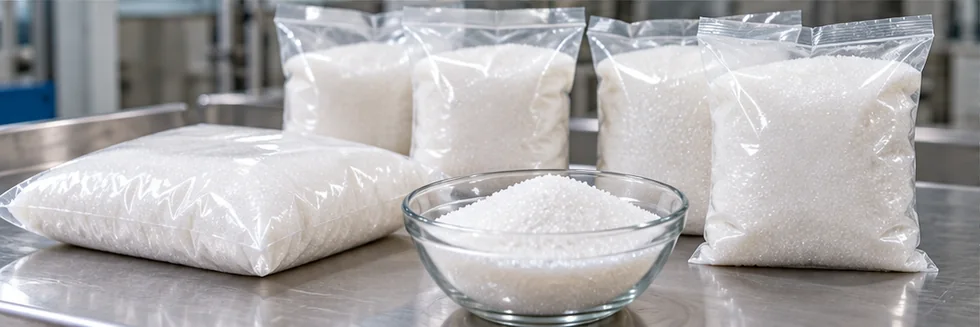
Sugar in Bags adds a retail or foodservice packing stage to a defined sugar type. Granulation and net mass distinguish household and ingredient packs. A packing barrier helps control moisture exposure and caking, while white, brown, and specialty sugars remain different products. The price of a labeled bag therefore includes more than the value of bulk crystalline sucrose.
Key Applications & Industrial Demand
Home baking, drinks, small kitchens, and foodservice use different bag sizes and crystal forms. Convenience and clean handling matter to small buyers, while large users may prefer bulk delivery or industrial sacks.
Key Factors Influencing Sugar in Bags Price Movements
- Sugar Preparation: Sugar type, refining level, granulation, and specialty ingredients determine the cost of material entering the packing line.
- Pack and Protection: Net mass, packing barrier, sealing, caking prevention, and handling influence costs per consumer unit.
- Shelf Pricing: Retail distribution, promotions, brand positioning, seasonal baking demand, and stock turnover affect the final bag price.
How to Interpret Sugar in Bags Pricing Data
Compare local-currency cost per kilogram with sugar type, granulation, bag size, and tax included. A promotional multi-pack and an industrial sack use different channels. Raw-sugar futures do not directly represent a ready-for-use consumer bag.
Further reading: USDA: Sugar Product Glossary
Frequently Asked Questions About Sugar in bags
What drives price changes for Sugar in Bags?
Refined-sugar costs, packaging, distribution, retail promotions, and local food demand influence bag prices.
How do quality or specification differences affect Sugar in Bags pricing?
Sugar type, crystal size, purity, moisture condition, brand, and net pack weight distinguish offers.
Why can local Sugar in Bags prices differ from global benchmarks?
Refining, bagging, transport, taxes, shelf costs, and promotions separate retail sugar from bulk raw or refined benchmarks.