


Understanding Soda ash dense Prices
Market Overview & Supply Chain Dynamics
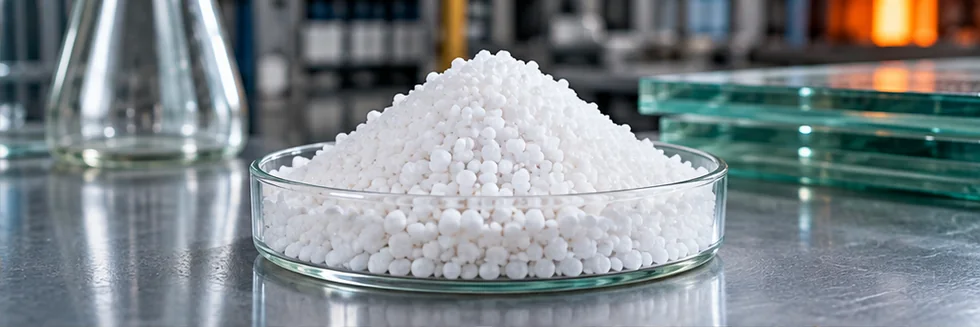
Soda Ash Dense is granular sodium carbonate made through natural-trona processing or synthetic chemical routes, then densified for efficient handling. Bulk density and particle size distinguish it from light soda ash even though both contain the same principal chemical. Glass plants favor a controlled granule distribution that blends predictably with sand during silica melting. Chloride content and other impurities matter because the material becomes part of the glass batch rather than disappearing during processing.
Key Applications & Industrial Demand
Container-glass and flat-glass furnaces use dense soda ash to lower the temperature required for silica melting. Detergent and chemical production also consume sodium carbonate, but glass demand is particularly important to the dense grade because of its handling and batch-mixing characteristics.
Key Factors Influencing Soda Ash Dense Price Movements
- Glass Furnace Runs: Container and flat-glass utilization changes soda-ash consumption, while furnace shutdowns can remove significant regional demand for dense granular material.
- Density and Granulation: Bulk density and particle size control silo capacity, dust, segregation, and batch consistency, creating value beyond nominal sodium carbonate assay.
- Process and Freight Costs: Natural-trona and synthetic plants have different energy and feedstock exposures; chloride content and ocean freight further differentiate delivered offers.
How to Interpret Soda Ash Dense Pricing Data
Prices are normally expressed per metric ton of dry material. Compare dense with dense rather than assuming a light-grade offer has identical logistics or furnace behavior. Bulk deliveries, big bags, and small sacks have different handling costs, particularly at terminals and inland glass plants.
Further reading: Solvay Soda Ash Products
Frequently Asked Questions About Soda ash dense
What drives price changes for Soda Ash Dense?
Glass production, plant operating rates, energy, and bulk freight are major influences. Capacity additions can ease supply even while individual glass-making regions remain tightly balanced.
How do quality or specification differences affect Soda Ash Dense pricing?
Assay, bulk density, granule distribution, chloride, and iron affect glassmakers' acceptance. Dense and light soda ash share chemistry but are not operationally identical.
Why can local Soda Ash Dense prices differ from global benchmarks?
Inland haulage, terminal handling, silo access, import duties, and distance from trona or synthetic production affect a glass plant's delivered cost.