
Price CloudO3GLOBAL COMMODITY MARKETS
English (US) Language
Sludge and waste oil collection fee icon
PORTS AND MARITIME SERVICES · SOURCES REPORT DIFFERENT PRICE TYPES

Sludge and Waste Oil Collection Fee Latest Prices

Sludge and Waste Oil Collection Fee prices reflect oily residues, water content, pumping, reception quantities, treatment, and disposal documentation.

Download history CSV ↓
Price series · 2

Price series — Sludge and waste oil collection fee

Sources report different price types Sources may update at different intervals

Exact item match: 2Related benchmark: 0Within recorded date window: 2Outside date range: 0No latest observation: 0Live reference: 0
Clear filters
Showing 1–2 of 2 Price seriesPage 1 / 1
Price series Sludge and waste oil collection fee
Provider / SourceCountry / market / CurrencyLatest priceObserved date / published periodFrequencyMappingStatusSource
Vietnam Handles Clean Environment at CMITThu gom dầu cặnship_waste_oil_collection_and_treatmentVietnam Handles Clean Environment at CMIT VN · Cai Mep International Terminal VietnamVND / kg ship waste oil 1,500.00VND / kg ship waste oil 10/25/2026First recorded (UTC)Last recorded by crawler: Collection day; the source does not give the publication or effective date. Published service tariffCurrent tariff · Tariff collection record
Series detailsBarge transport: separate_published_trip_charge_not_included_in_kg_rateIncluded service: collection_and_treatment_as_publishedOcr validation: full_named_row_and_independent_numeric_cell_agree_under_layout_guardWaste class: waste_oilPublished price, not a recorded transactionOriginal currency and unitCoverage limited to the listed source and marketVerified dual pass OCR source scan
Exact item match Within recorded date window Source ↗History
Vietnam Handles Clean Environment at CMITThu gom dầu cặnship_waste_oil_collection_and_treatmentVietnam Handles Clean Environment at CMIT VN · Cai Mep International Terminal VietnamVND / kg ship waste oil 1,500.00VND / kg ship waste oil 11/18/2026First recorded (UTC)Last recorded by crawler: Collection day; the source does not give the publication or effective date. Published service tariffCurrent tariff · Tariff collection record
Series detailsBarge transport: separate_published_trip_charge_not_included_in_kg_rateIncluded service: collection_and_treatment_as_publishedOcr validation: full_named_row_and_independent_numeric_cell_agree_under_layout_guardWaste class: waste_oilPublished price, not a recorded transactionOriginal currency and unitCoverage limited to the listed source and marketVerified dual pass OCR source scan
Exact item match Within recorded date window Source ↗History

Price history

Each source has its own currency and unit · Sources may update at different intervals
No data in this range. View full history →

Historical price table

Actual publication periods; missing periods are not interpolated
0 records
Price history Sludge and waste oil collection fee — Each source has its own currency and unit
PeriodPrice (Each source has its own currency and unit)Source
No records in this range.

Definition: A charge for receiving and handling specified oily residues or waste oil from a vessel.

Key Specifications and Terms:

Understanding Sludge and waste oil collection fee Prices
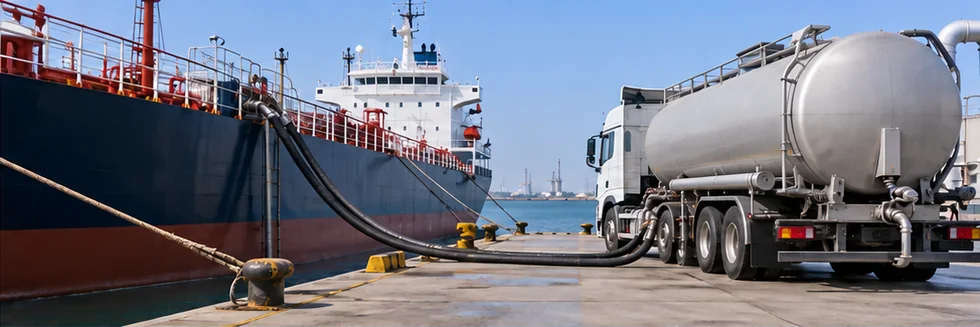
Ship waste-oil tanker and pump hoses on a quay beside a moored vessel.
Illustrative image for the Sludge and Waste Oil Collection Fee market guide.

Market Overview & Supply Chain Dynamics

A sludge and waste oil collection fee covers reception and handling of oily sludge or liquid residues through a declared volume and treatment route. Pumping needs, water content, viscosity, contamination, and transfer access determine the work. Waste oil with recoverable value is not automatically equivalent to water-heavy sludge requiring expensive treatment. The commercial chain can include vessel transfer, truck or barge transport, reception, separation, and final authorized disposal or recovery.

Key Applications & Industrial Demand

Ship engineers, managers, and agents arrange collection when onboard residue storage and voyage plans require it. Demand follows fuel and lubrication operations, machinery condition, and available reception capacity. Advance declarations help the collector plan suitable equipment, safe access, compatible connections, and the accepted waste composition.

Key Factors Influencing Sludge and Waste Oil Collection Fee Price Movements

  • Residue Composition: Oily sludge, water content, solids, contamination, and viscosity influence whether material can be recovered or needs more costly treatment.
  • Transfer Arrangements: Pumping, reception volume, hoses, connections, berth access, trucks or barges, and minimum attendance determine collection resources.
  • Treatment Liability: Treatment route, transport, authorized disposal, testing, and required certificates establish the complete environmental service included in the fee.

How to Interpret Sludge and Waste Oil Collection Fee Pricing Data

Compare rates per cubic meter or tonne only after identifying composition, minimum quantity, transfer method, and treatment scope. Vessel pumping, collector pumping, waiting, transport, analysis, and certificates may be separate. A quotation for clean used lubricant cannot establish the disposal cost of mixed ship-generated sludge.

Further reading: CMIT: Ship-Generated Waste Reception Schedule

Frequently Asked Questions About Sludge and waste oil collection fee

What Drives Price Changes for Sludge and Waste Oil Collection Fee?

Residue composition, water content, pump requirements, treatment capacity, transport, and minimum collection volumes influence charges.

How Do Quality or Specification Differences Affect Sludge and Waste Oil Collection Fee Pricing?

Accepted composition, safe transfer, authorized treatment, traceability, and included documentation distinguish sludge and waste-oil services.

Why Can Local Sludge and Waste Oil Collection Fee Prices Differ From Global Benchmarks?

Reception capacity, disposal rules, barge or truck access, treatment distance, and recovery economics differ among ports.