


Understanding Sawn acacia timber Prices
Market Overview & Supply Chain Dynamics
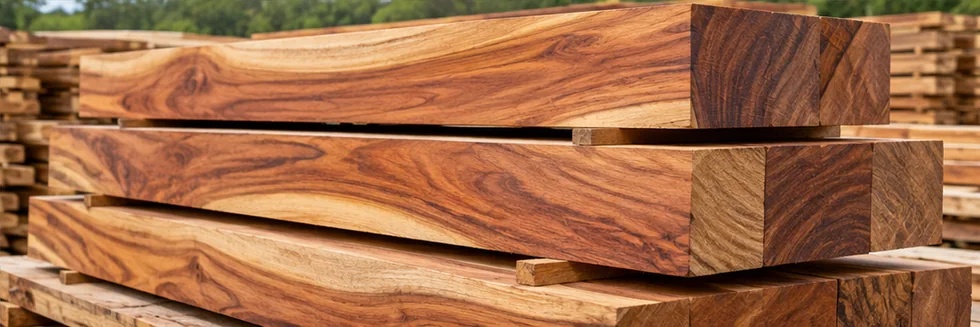
Sawn Acacia Timber needs a stated species identity, because plantation acacias do not all produce equivalent wood. Density, drying movement, heartwood color, and clear-piece yield influence prices. Sawmills convert relatively small plantation logs into boards, then may dry, treat, and finger-joint short sections. The resulting conditioned material should be distinguished from green rough timber sold near the plantation.
Key Applications & Industrial Demand
Furniture, panels, joinery, packaging, and other wood products use suitable acacia grades. Manufacturers match color, dimensions, moisture, and strength to their design. Short-component production can use a different mix of boards from visible wide-panel furniture.
Key Factors Influencing Sawn Acacia Timber Price Movements
- Plantation and Log Size: Species identity, harvest age, log diameter, density, and plantation access influence sawing recovery and the available board dimensions.
- Drying Recovery: Drying movement, checking, kiln schedules, and moisture targets affect how much straight usable timber remains after conditioning.
- Appearance and Components: Heartwood color, clear-piece yield, knots, jointing, and furniture orders determine premiums for selected boards or processed components.
How to Interpret Sawn Acacia Timber Pricing Data
Compare acacia offers per cubic meter or board measure with species, dimensions, moisture, and grade declared. Account for dry shrinkage and component cutting yield. Finger-jointed panels and rough green boards have different conversion content despite sharing the acacia name.
Further reading: USDA Timber Properties and Lumber Processing
Frequently Asked Questions About Sawn acacia timber
What Drives Price Changes for Sawn Acacia Timber?
Plantation harvesting, log size, sawmill output, kiln energy, furniture demand, and export freight influence prices. Preferred colors and dimensions can remain scarce in mixed plantation supply.
How Do Quality or Specification Differences Affect Sawn Acacia Timber Pricing?
Species, density, color, knots, checks, moisture, dimensions, and clear recovery matter. A broad acacia label does not establish identical machining or finishing behavior.
Why Can Local Sawn Acacia Timber Prices Differ From Global Benchmarks?
Harvest distance, drying and jointing capacity, freight, duties, local furniture orders, and grade selection affect prices. Nearby conditioned supply can reduce factory loss and stockholding.