


Understanding Rock wool insulation Prices
Market Overview & Supply Chain Dynamics
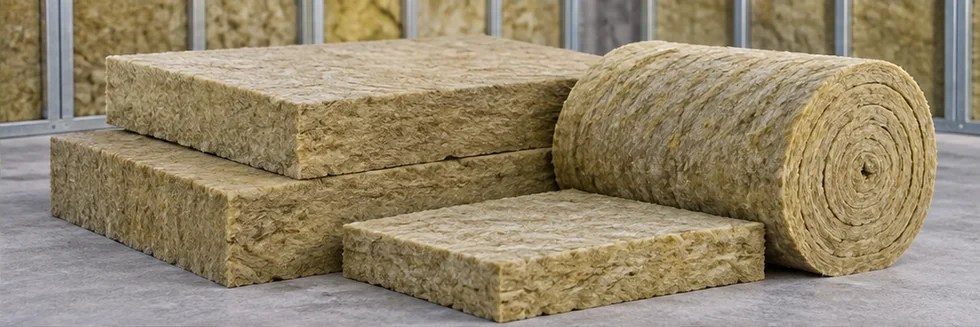
Rock Wool Insulation is formed by melting mineral feed, creating a fiber structure, and processing it into batts, boards, blankets, or other forms. Thermal conductivity, density, facing, and fire classification distinguish grades. Roofing boards, cavity batts, and industrial pipe sections require different mechanical and thermal properties. A dense product is not automatically the best or cheapest insulation for every application.
Key Applications & Industrial Demand
Buildings, industrial equipment, ducts, roofs, partitions, and piping use suitable mineral-wool products. Buyers choose thermal, acoustic, fire-related, and compressive performance according to the system. Facings, fixings, gaps, and moisture control influence installed performance.
Key Factors Influencing Rock Wool Insulation Price Movements
- Melting and Forming: Mineral inputs, furnace energy, binder, fiber structure, and production yield influence the manufacturing cost of different stone-wool forms.
- Declared Performance: Thermal conductivity, density, thickness, compressive behavior, and fire classification determine which product can meet an installation's specification.
- Facing and System Scope: Facing, dimensions, packaging, bulky transport, fixings, and application-specific documentation create costs beyond uninstalled fiber material.
How to Interpret Rock Wool Insulation Pricing Data
Compare prices by square meter at the same thickness and declared performance, or by the specified pipe-section dimensions. Weight-based prices can mislead because density differs. Installation accessories, facings, waste, and thermal bridges affect the cost and performance of the completed insulation.
Further reading: ROCKWOOL Thermal and Building-System Guide
Frequently Asked Questions About Rock wool insulation
What Drives Price Changes for Rock Wool Insulation?
Furnace energy, mineral feed, binder, specialist capacity, construction, and industrial maintenance influence prices. Roof boards and low-density cavity batts can face different demand.
How Do Quality or Specification Differences Affect Rock Wool Insulation Pricing?
Conductivity, thickness, density, strength, moisture behavior, facing, and fire documentation matter. The complete assembly determines many fire and acoustic outcomes rather than the wool alone.
Why Can Local Rock Wool Insulation Prices Differ From Global Benchmarks?
Bulky freight, local manufacturing, duties, project specifications, packaging, and installer access affect prices. Regional certification and available thicknesses can alter qualified supply.