


Understanding rLDPE pellets Prices
Market Overview & Supply Chain Dynamics
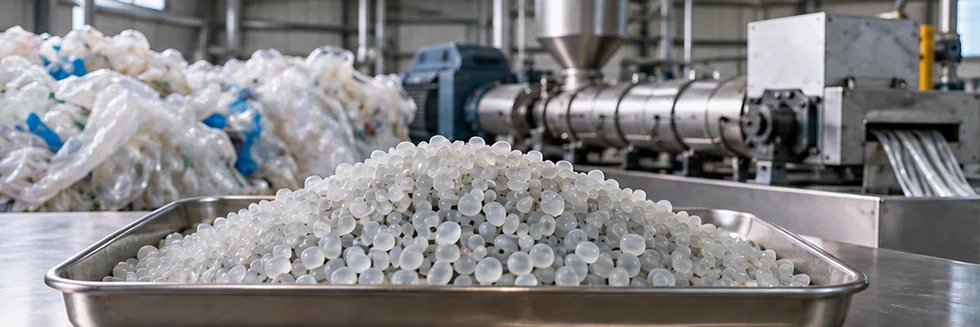
rLDPE Pellets commonly begin with film collection, sorting, washing, moisture removal, and extrusion with filtration. Gel count and color and odor determine whether a grade can return to film or must enter a less demanding product. Agricultural, commercial, and post-industrial films have different contamination histories. Producing consistent pellets requires control of that feedstock rather than simply remelting any flexible packaging.
Key Applications & Industrial Demand
Refuse sacks, secondary packaging films, construction sheets, profiles, and compounded products use suitable rLDPE. Thin-film converters are particularly sensitive to gels and foreign polymers. Cleaner industrial scrap can support more demanding film applications than dirty mixed post-consumer material.
Key Factors Influencing rLDPE Pellets Price Movements
- Recovered Film Quality: Film collection quality determines dirt, inks, multilayer contamination, and yield, changing the cost of usable polyethylene recovered from each bale.
- Extrusion Cleanliness: Filtration, gel count, and moisture removal influence bubbles, holes, and line stability, making well-cleaned pellets valuable to thin-film producers.
- Marketable Appearance: Color and odor constrain outlets, while consistent light-colored material can earn more than dark mixed pellets destined for thicker products.
How to Interpret rLDPE Pellets Pricing Data
Per-ton offers should state flow, color, gel limits, ash, and intended film use. A high-yield clean grade may reduce film breaks enough to justify a premium. Multilayer waste and virgin LDPE have different processing risks and commercial bases.
Further reading: Association of Plastic Recyclers
Frequently Asked Questions About rLDPE pellets
What Drives Price Changes for rLDPE Pellets?
Film-scrap collection, washing energy, filtration costs, virgin polyethylene competition, and sack or packaging orders influence rLDPE prices. Clean clear film often commands a premium.
How Do Quality or Specification Differences Affect rLDPE Pellets Pricing?
Gels, contamination, ash, flow, odor, and color matter. The thinner the film, the less tolerance there is for poorly filtered or inconsistent recycled feedstock.
Why Can Local rLDPE Pellets Prices Differ From Global Benchmarks?
Collection distance, washing infrastructure, water disposal, extrusion capacity, and freight affect costs. Regional availability of clean commercial film can produce large differences in usable-pellet prices.