


Understanding Raw chicken Prices
Market Overview & Supply Chain Dynamics
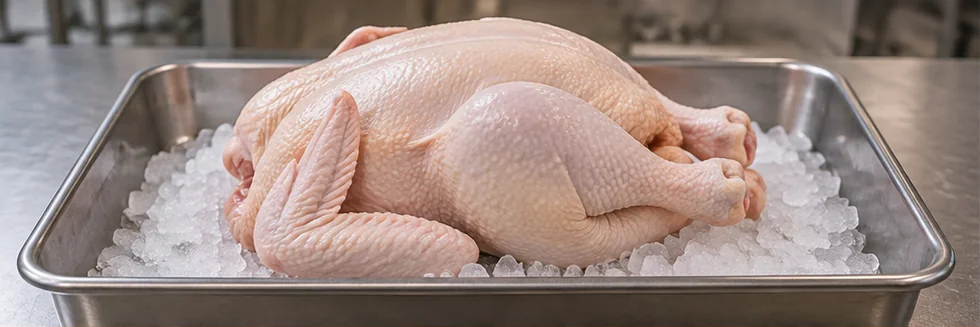
Raw Chicken needs a defined whole-bird or cut presentation. Carcass weight and evisceration distinguish the saleable product from a live bird. Retained water, skin condition, and chilled state affect comparisons between processors. A plucked, eviscerated broiler with giblets included is not identical to a cut pack or frozen carcass even at the same nominal weight.
Key Applications & Industrial Demand
Retailers, restaurants, rotisseries, and processors purchase birds by size and intended portioning. Whole-bird buyers value uniformity and skin appearance, while processors focus on cut recovery and the balance of breast, leg, and other outputs.
Key Factors Influencing Raw Chicken Price Movements
- Bird and Carcass Yield: Growth, carcass weight, evisceration, and cut recovery determine the meat output available from each flock.
- Processing Condition: Retained water, skin condition, bruising, and chilled state distinguish the actual raw product supplied.
- Poultry Balance: Feed costs, flock placements, slaughter capacity, disease controls, and demand across chicken cuts influence whole-bird prices.
How to Interpret Raw Chicken Pricing Data
Read prices per kilogram or bird using the stated carcass, giblet, and preservation basis. Separate live-weight prices from processed meat. Packaging, retained water, slaughter service, cold transport, and cut-up labor can alter the usable cost.
Further reading: USDA: Poultry Classes and Grades
Frequently Asked Questions About Raw chicken
What drives price changes for Raw Chicken?
Feed costs, flock output, disease conditions, slaughter capacity, and retail or foodservice demand influence chicken prices.
How do quality or specification differences affect Raw Chicken pricing?
Whole or cut form, weight, evisceration, giblets, skin defects, retained water, and chilled or frozen state distinguish offers.
Why can local Raw Chicken prices differ from global benchmarks?
Local flock supply, slaughter labor, carcass preparation, cold logistics, trade access, and preferred bird sizes create regional prices.