


Understanding Public-sector water service Prices
Market Overview & Supply Chain Dynamics
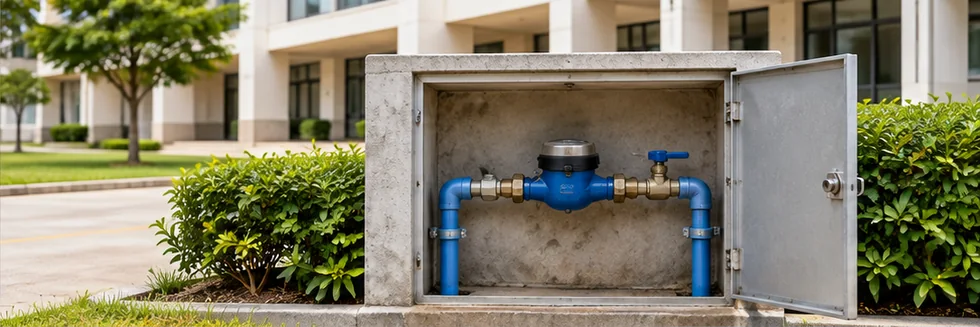
Public-Sector Water Service supplies civic buildings and eligible institutions under a defined customer schedule. Institutional eligibility establishes the billing class, while the facility meter determines which premises are included. Sanitary demand varies between an administrative office, school, and public sports center. A separate irrigation connection may distinguish landscape consumption from water entering the sewer system.
Key Applications & Industrial Demand
Public facilities require water for toilets, cleaning, kitchens, grounds, and service delivery. School calendars and civic operating hours create demand patterns unlike industrial production. Large campuses often manage leaks and internal distribution within their own property boundary.
Key Factors Influencing Public-Sector Water Service Price Movements
- Institutional Classification: Institutional eligibility and the facility meter define the water account, especially where public facilities share space with commercial tenants.
- Facility Use: Sanitary demand follows enrollment, visitor numbers, and opening calendars; swimming pools or kitchens add specialized consumption.
- Network Funding: Capital recovery and the cost of a separate irrigation connection influence the amount paid beyond basic volumetric water use.
How to Interpret Public-Sector Water Service Pricing Data
Evaluate public-institution water rates in local currency per cubic meter and identify fixed account charges. Check the campus meter boundary, landscape accounts, and wastewater treatment. A tariff concession where available should be assessed alongside capital recovery and service obligations.
Further reading: EPA: Utility Water Rate Structures
Frequently Asked Questions About Public-sector water service
What drives price changes for Public-Sector Water Service?
Customer-class revisions and municipal water-cost recovery change tariffs. Enrollment, opening hours, leaks, and landscape watering alter the institution's actual expenditure.
How do quality or specification differences affect Public-Sector Water Service pricing?
Facility classification, meter size, campus boundaries, and separate irrigation or sewer accounts determine the billed service. Public ownership alone does not define the tariff.
Why can local Public-Sector Water Service prices differ from global benchmarks?
Civic water supply is financed through local treatment and distribution systems. Institutional policy, regional water availability, and municipal cost allocation differ widely.