


Understanding Pork belly Prices
Market Overview & Supply Chain Dynamics
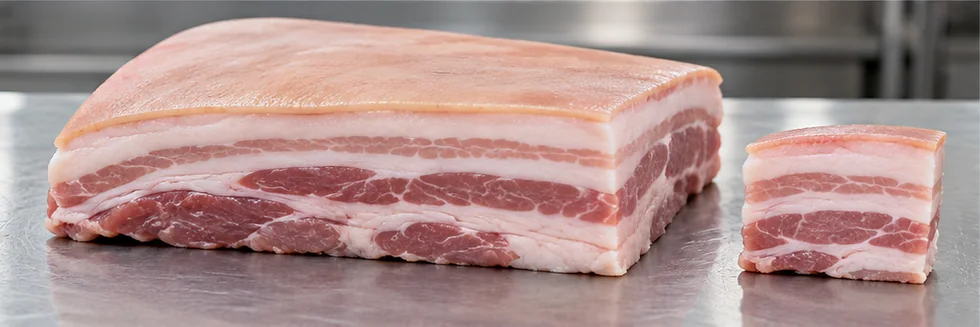
Pork Belly is an abdominal primal valued for fat-to-lean ratio and belly thickness. Skin-on and rindless forms serve different markets, while rib removal and edge trimming alter recovery. Firmness affects slicing and bacon processing. A thick rectangular processing belly is therefore not automatically comparable with a smaller retail cut carrying rind, ribs, or uneven trimming.
Key Applications & Industrial Demand
Bacon processors, roasting and braising markets, restaurants, and retail butchers buy belly to different specifications. Seasonal food demand can shift value toward this cut even when overall hog supply is stable.
Key Factors Influencing Pork Belly Price Movements
- Cut Composition: Fat-to-lean ratio, belly thickness, and firmness determine suitability for bacon slicing or fresh culinary uses.
- Fabrication Scope: Skin-on status, rib removal, edge trim, and portion size change the amount of usable material sold per kilogram.
- Cut-Specific Demand: Bacon production, restaurant orders, export preferences, cold stocks, and pork-carcass output influence the belly premium.
How to Interpret Pork Belly Pricing Data
Compare currency per kilogram for the same skin, bone, trim, size, and fresh or frozen condition. Factory primal, sliced retail meat, and cured bacon are different stages. Use edible or processing recovery to assess the value of differing fat and trim levels.
Further reading: USDA FSIS: Pork Primals and Subprimals
Frequently Asked Questions About Pork belly
What drives price changes for Pork Belly?
Hog slaughter, belly yields, bacon orders, restaurant demand, exports, and frozen inventories influence this cut's price.
How do quality or specification differences affect Pork Belly pricing?
Fat-to-lean ratio, thickness, rind, bone, trim, firmness, and preservation state distinguish belly products.
Why can local Pork Belly prices differ from global benchmarks?
Local cooking preferences, cutting labor, cold storage, freight, import rules, and retail portioning create cut-specific premiums.