


Understanding Polyester DTY yarn Prices
Market Overview & Supply Chain Dynamics
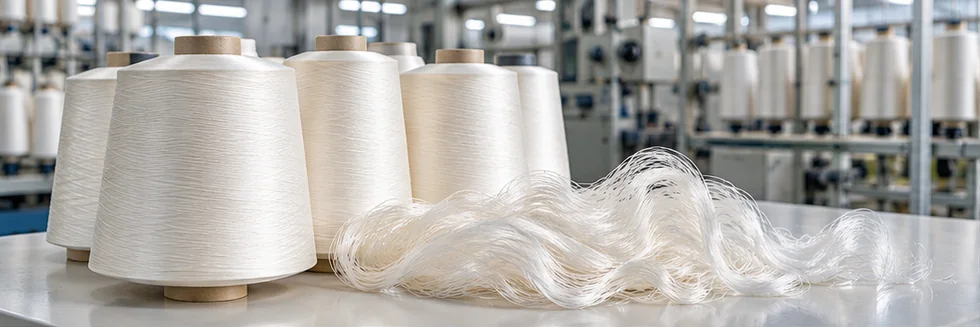
Polyester DTY Yarn is a drawn and textured filament product commonly made from POY through false-twist texturing. Crimp, denier per filament, intermingling, and heat setting distinguish commercial grades. DTY is a finished textured yarn rather than untextured spinning feed. Heater control, draw ratio, tension, and winding affect consistency, dyeing behavior, and the bulk delivered to a knitting or weaving operation.
Key Applications & Industrial Demand
Apparel, sportswear, home textiles, upholstery, and other fabrics use DTY chosen for texture, stretch, softness, and appearance. Filament count, cross-section, luster, and dyeing route create different products. Microfilament and ordinary filament yarns can have distinct handling and feel.
Key Factors Influencing Polyester DTY Yarn Price Movements
- Polyester Feed Yarn: POY costs, polyester intermediates, feed quality, and texturing capacity influence the cost of producing accepted draw-textured yarn.
- Texture Engineering: False-twist texturing, crimp, heat setting, and tension control determine bulk, recovery, and uniformity in the final fabric.
- Filament and Package Quality: Denier per filament, intermingling, broken filaments, dye consistency, and winding affect machine performance and the value of a qualified DTY grade.
How to Interpret Polyester DTY Yarn Pricing Data
DTY is commonly quoted per kilogram with denier or dtex, filament count, luster, interlace, color, and package specified. Compare the same texture and dyeing requirements. POY prices exclude drawing and texturing, while fabric prices include another stage of conversion.
Further reading: Barmag DTY Production and Texturing
Frequently Asked Questions About Polyester DTY yarn
What Drives Price Changes for Polyester DTY Yarn?
POY values, energy, texturing output, apparel orders, and machine utilization influence prices. Specialty microfilament or consistent-dyeing grades can carry premiums over ordinary DTY.
How Do Quality or Specification Differences Affect Polyester DTY Yarn Pricing?
Linear density, filament count, crimp, tenacity, interlace, shrinkage, dyeability, and broken filaments matter. A similar nominal denier can produce a very different textile hand.
Why Can Local Polyester DTY Yarn Prices Differ From Global Benchmarks?
Texturing capacity, freight, duties, stock colors, minimum orders, and nearby knitting or weaving demand affect prices. Qualified consistent packages can reduce conversion and dyeing losses.