


Understanding MDF board Prices
Market Overview & Supply Chain Dynamics
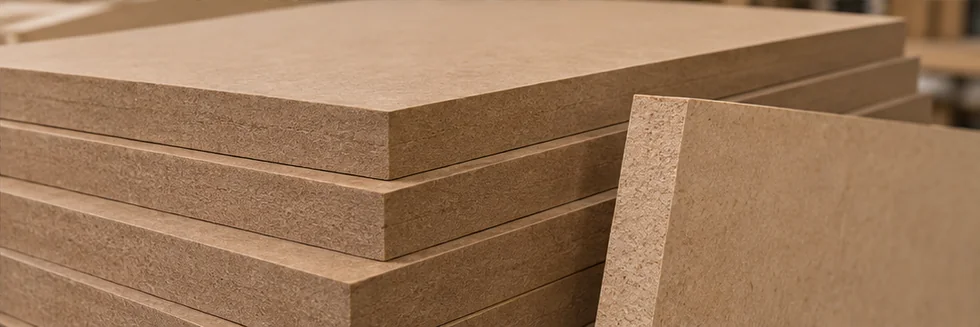
MDF Board is pressed from refined fibers and resin into a panel with a controlled density profile. Internal bond, emissions class, and thickness swelling distinguish commercial grades. Refining, drying, resin application, pressing, and sanding create consistent surfaces for finishing. Standard MDF, moisture-resistant grades, and fire-related products have different specifications; density alone cannot establish their suitability.
Key Applications & Industrial Demand
Furniture, cabinet doors, decorative moldings, interior panels, and coated products use MDF. Smooth faces and machinable edges support paint and laminate finishes. The application must account for fastening, moisture, edge sealing, and whether the selected board is approved for its intended service.
Key Factors Influencing MDF Board Price Movements
- Fiber and Press Costs: Refined fibers, resin, drying energy, press utilization, and sanding yield determine the manufacturing cost of accepted MDF panels.
- Mechanical Uniformity: Internal bond, density profile, flatness, and thickness tolerance affect routing, machining, surface finish, and the durability of fabricated components.
- Qualification and Moisture: Emissions class, thickness swelling, resin system, and intended exposure create separate grades with different production and certification costs.
How to Interpret MDF Board Pricing Data
MDF may be priced per sheet, cubic meter, or square meter at a stated thickness. Compare actual dimensions, grade, emissions, surface, and moisture specification. Melamine-faced or veneered board includes additional material and processing beyond raw sanded MDF.
Further reading: USDA Wood-Based Composite Panel Handbook
Frequently Asked Questions About MDF board
What Drives Price Changes for MDF Board?
Wood-fiber supply, resin, energy, press capacity, furniture production, and interior construction influence prices. Specialty low-emission or moisture-resistant grades can have distinct premiums.
How Do Quality or Specification Differences Affect MDF Board Pricing?
Density profile, internal bond, thickness, flatness, swelling, emissions, and surface quality matter. A heavier board does not automatically provide better machining or moisture performance.
Why Can Local MDF Board Prices Differ From Global Benchmarks?
Local panel mills, resin supply, freight, duties, stock thicknesses, and laminating capacity affect costs. Bulky sheet transport and edge damage can increase usable-panel expense.