


Understanding Liquid nitrogen Prices
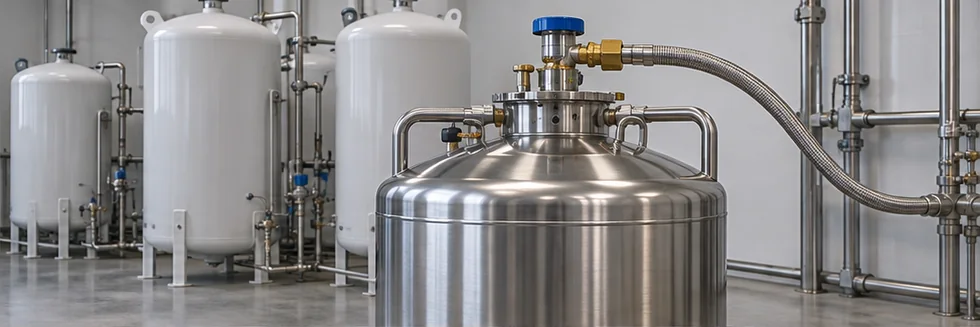
Market Overview & Supply Chain Dynamics
Liquid Nitrogen is produced by cryogenic distillation of air and delivered through bulk tanks or insulated dewars. Its latent cooling capacity supports rapid freezing, while low oxygen impurity is important when vaporized nitrogen protects sensitive processes. Boil-off losses make inventory turnover relevant: a low delivered price can become expensive when liquid remains unused. Merchant supply depends on separation-plant electricity costs and the efficiency of local delivery routes.
Key Applications & Industrial Demand
Food freezing, metal treatment, laboratory cooling, biological storage, and manufacturing processes use liquid nitrogen. Some customers purchase primarily cooling capacity; others vaporize it for inerting. These applications require different vessel sizes, withdrawal systems, and purity documentation.
Key Factors Influencing Liquid Nitrogen Price Movements
- Electricity and Plant Loading: Cryogenic distillation economics depend on power costs and the operating balance among nitrogen, oxygen, and other air-separation products.
- Storage Turnover: Insulated dewars and bulk tanks limit heat entry, but boil-off losses increase effective cost when withdrawal is slow or equipment is poorly sized.
- Cooling and Purity Needs: Latent cooling demand and oxygen impurity limits distinguish routine freezing from sensitive inerting or laboratory uses, influencing service and grade premiums.
How to Interpret Liquid Nitrogen Pricing Data
Liquid purchases can be per liter, kilogram, or metric ton; gas-volume quotations describe a different physical basis. Dewar rental, delivery, minimum quantity, and transfer losses should be included when evaluating cost. Food or laboratory qualification can add value beyond the nitrogen assay.
Further reading: Linde Cryogenic Bulk-Gas Systems
Frequently Asked Questions About Liquid nitrogen
What drives price changes for Liquid Nitrogen?
Power costs, separation-plant availability, food-freezing demand, and cryogenic delivery capacity influence prices. Delivery frequency can dominate the bill for small consumers.
How do quality or specification differences affect Liquid Nitrogen pricing?
Purity, oxygen and moisture limits, food-use documentation, vessel cleanliness, and withdrawal arrangement affect suitability. A basic cooling grade may not meet sensitive process requirements.
Why can local Liquid Nitrogen prices differ from global benchmarks?
Distance from the plant, dewar rental, tank utilization, transfer losses, and minimum delivery charges shape local cost. Liquid nitrogen is difficult to arbitrage over long distances.