


Understanding Kaolin Prices
Market Overview & Supply Chain Dynamics
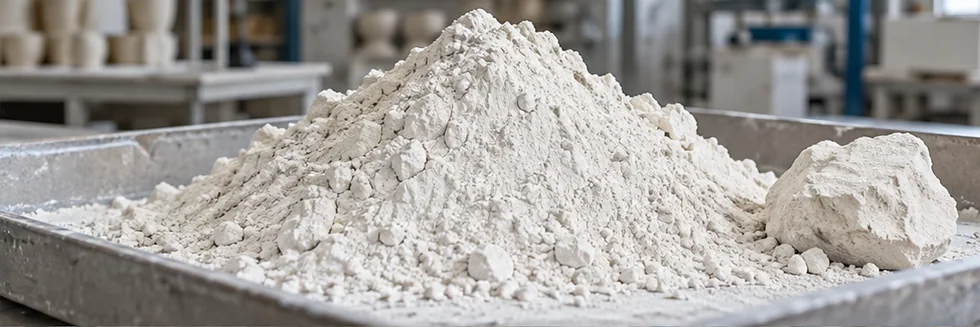
Kaolin is a kaolinite-rich mineral refined by classification, impurity removal, and sometimes calcination. Brightness, particle size, abrasion, and chemistry define separate commercial grades. Hydrous and calcined products differ in structure and performance, while paper coating and ceramic use demand different balances. Processing can add substantial value beyond the cost of mining a pale clay deposit.
Key Applications & Industrial Demand
Paper coatings, ceramics, paints, rubber or plastic fillers, refractories, and other formulations use selected kaolin. Customers value optical properties, rheology, firing behavior, or reinforcement according to the application. A high-brightness coating grade is not automatically a ceramic-body substitute.
Key Factors Influencing Kaolin Price Movements
- Beneficiation Requirements: Kaolinite deposit quality, mineral impurities, classification, and brightness improvement determine the recovery and cost of a saleable industrial grade.
- Particle Engineering: Particle size, shape, and abrasion influence coating, dispersion, surface finish, and equipment wear, creating value beyond mineral assay.
- Thermal Processing: Calcination adds energy and changes product behavior, while ceramic, paper, and coating demand determine which processed grades buyers require.
How to Interpret Kaolin Pricing Data
Kaolin can trade per dry metric ton as powder or slurry. State hydrous or calcined form, solids, brightness, sizing, and intended use. Slurry freight includes water, and a quarry value omits the beneficiation needed for high-quality coating or ceramic performance.
Further reading: USGS Kaolin and Industrial Clays
Frequently Asked Questions About Kaolin
What Drives Price Changes for Kaolin?
Deposit output, beneficiation energy, calcination costs, paper production, ceramics, and coatings demand influence prices. Specialty brightness or particle grades may retain premiums.
How Do Quality or Specification Differences Affect Kaolin Pricing?
Brightness, mineral impurities, particle distribution, abrasion, moisture, and thermal form matter. A visually white powder can still behave differently in coating or firing.
Why Can Local Kaolin Prices Differ From Global Benchmarks?
Mine distance, refining, slurry handling, drying, freight, duties, and local ceramic or paper demand affect prices. Available processing capability often matters more than raw-clay abundance.