


Understanding Industrial rubber hose Prices
Market Overview & Supply Chain Dynamics
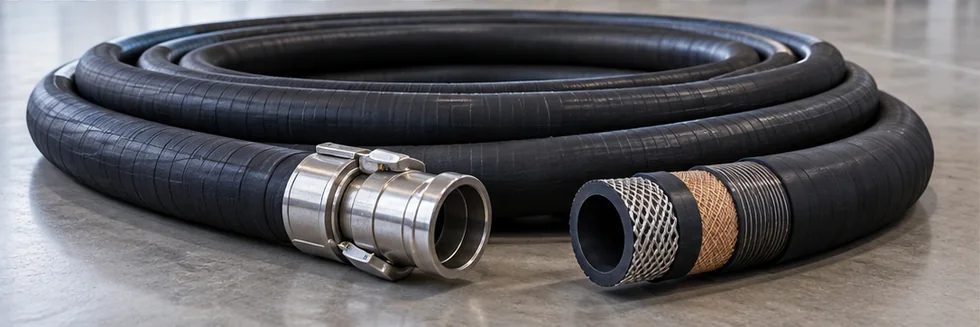
Industrial Rubber Hose is built around an inner tube, reinforcement, and an outer protective cover. Working pressure, bend radius, end fittings, and fluid compatibility define the assembly. Hydraulic, chemical, air, steam, fuel, and material-transfer hoses are different engineered products. Manufacturing includes extrusion, reinforcement application, curing, and testing, followed by coupling when a complete hose assembly is sold.
Key Applications & Industrial Demand
Factories, construction equipment, mines, chemical plants, and transport systems use hoses for specified media. A hose suitable for compressed air may fail in oil or steam service. Purchasers need compatibility with temperature, pressure cycles, abrasion, and the mechanical movement of the installation.
Key Factors Influencing Industrial Rubber Hose Price Movements
- Liner Chemistry: The inner tube must tolerate the fluid and temperature, making chemical compatibility and cleanliness central to compound selection and customer qualification.
- Pressure Construction: Reinforcement type, working pressure, diameter, and bend radius determine material use and the complexity of a hose designed for repeated service.
- Assembly and Testing: End fittings, crimping, pressure tests, certification, and custom lengths add value beyond the price of an unassembled length of rubber hose.
How to Interpret Industrial Rubber Hose Pricing Data
Compare hose per meter only when bore, pressure rating, reinforcement, cover, and medium match. A complete assembly price also includes fittings and testing. Burst pressure is not the continuous operating limit, and a generic rubber benchmark omits construction value.
Further reading: Continental Industrial Fluid Solutions
Frequently Asked Questions About Industrial rubber hose
What Drives Price Changes for Industrial Rubber Hose?
Elastomer compounds, steel or textile reinforcement, energy, equipment production, and maintenance demand influence hose prices. Certified assemblies and urgent replacement orders can carry premiums.
How Do Quality or Specification Differences Affect Industrial Rubber Hose Pricing?
Fluid compatibility, working pressure, temperature, bend radius, reinforcement, and coupling quality determine value. A dimensionally similar hose may still be unsafe for another service medium.
Why Can Local Industrial Rubber Hose Prices Differ From Global Benchmarks?
Custom assembly, fittings, testing, freight, duties, and local stock affect prices. On-site measurement and rapid replacement service can contribute more than raw hose cost.