


Understanding Industrial bearings Prices
Market Overview & Supply Chain Dynamics
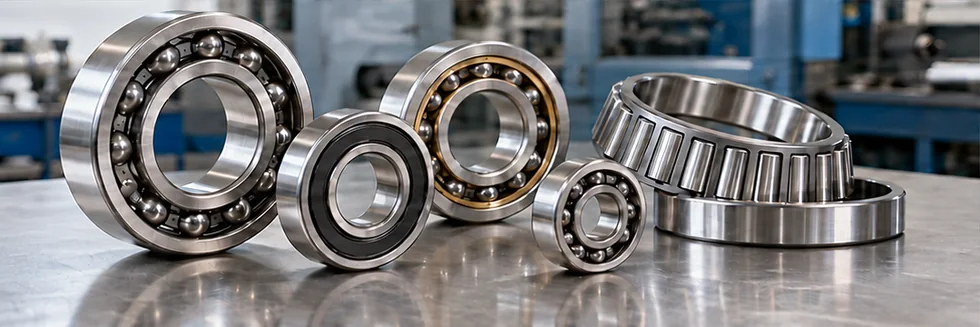
Industrial bearings support shafts and moving assemblies through rolling or sliding contact. Dynamic load rating, internal clearance, cage construction, seals, and precision class determine more than the nominal bore dimension. Rings, rolling elements, heat treatment, surface finishing, lubrication, and testing form a precision manufacturing chain. Bearing life also depends on installation, loads, contamination, and lubrication, so catalog ratings cannot guarantee a particular plant's operating hours.
Key Applications & Industrial Demand
Motors, pumps, machine tools, conveyors, gearboxes, and heavy process equipment use different bearing geometries. Replacement demand frequently centers on an exact designation and suffix. High-speed spindle bearings and general industrial bearings serve distinct accuracy, preload, and lubrication requirements despite similar outer dimensions.
Key Factors Influencing Industrial Bearings Price Movements
- Load and Geometry: Dynamic load rating, bearing type, dimensions, contact geometry, and material quality determine load capacity and suitability for an operating duty.
- Precision and Internal Design: Internal clearance, precision class, cage construction, seals, and lubricant requirements distinguish standard replacements from high-speed or high-accuracy bearings.
- Traceable Availability: Exact suffix availability, authorized distribution, matched-set testing, storage, and maintenance urgency affect local stock premiums and replacement value.
How to Interpret Industrial Bearings Pricing Data
Prices are per bearing, matched set, or housed assembly. Retain the complete designation, clearance, seal, cage, precision, and lubrication specification. Authorized traceability, storage condition, and mounting support matter because counterfeit or incorrectly specified replacements can create downtime far beyond the purchase saving.
Further reading: SKF: Rolling Bearing Design and Selection
Frequently Asked Questions About Industrial bearings
What drives price changes for Industrial Bearings?
Bearing dimensions, steel and finishing requirements, precision, industrial production, and demand for exact maintenance replacements influence prices.
How do quality or specification differences affect Industrial Bearings pricing?
Load capability, tolerances, clearance, sealing, lubrication, and material quality distinguish bearings that share the same bore diameter.
Why can local Industrial Bearings prices differ from global benchmarks?
Urgent availability, authorized traceability, small quantities, mounting support, and specialty suffix stock create local maintenance-market premiums.