


Understanding Hybrid corn seeds Prices
Market Overview & Supply Chain Dynamics
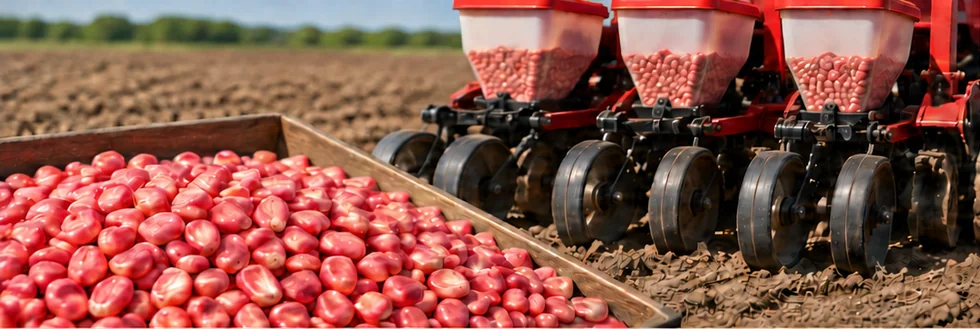
Hybrid Corn Seeds are produced through controlled crosses rather than selected from an ordinary grain lot. Hybrid purity, germination, and vigor influence crop establishment, while seed sizing supports planter performance. A trait package may add agronomic or licensed features. The particular hybrid's adaptation and production process therefore explain prices that cannot be derived directly from commodity corn values.
Key Applications & Industrial Demand
Commercial maize growers buy hybrids for their maturity, yield potential, disease response, and intended grain or forage use. Field conditions, planting equipment, and the production objective determine suitability; a premium hybrid is not automatically the best choice in every location.
Key Factors Influencing Hybrid Corn Seeds Price Movements
- Genetic Production: Hybrid purity, parental multiplication, crossing control, and the trait package determine seed identity and production cost.
- Planting Performance: Germination, vigor, seed sizing, treatment, and storage influence establishment potential and planter compatibility.
- Local Agronomic Demand: Hybrid adaptation, seasonal orders, multiplication yields, licensing, testing, and distribution timing influence market prices.
How to Interpret Hybrid Corn Seeds Pricing Data
Compare currency per bag or planting unit with seed count, hybrid, germination, treatment, size, and declared traits. Weight-based comparisons can mislead when kernel size differs. Retained grain from a hybrid crop does not reproduce the original commercial seed proposition.
Further reading: FAO: Seed Production and Quality
Frequently Asked Questions About Hybrid corn seeds
What drives price changes for Hybrid Corn Seeds?
Hybrid production costs, trait licensing, multiplication yields, quality recovery, seasonal orders, and local adaptation demand influence prices.
How do quality or specification differences affect Hybrid Corn Seeds pricing?
Hybrid identity, traits, maturity, germination, vigor, seed count, sizing, and treatment distinguish commercial bags.
Why can local Hybrid Corn Seeds prices differ from global benchmarks?
Local adaptation, licensing, testing, treatment, inventory timing, and farm distribution add value beyond grain-market prices.