


Understanding HDPE blow molding grade Prices
Market Overview & Supply Chain Dynamics
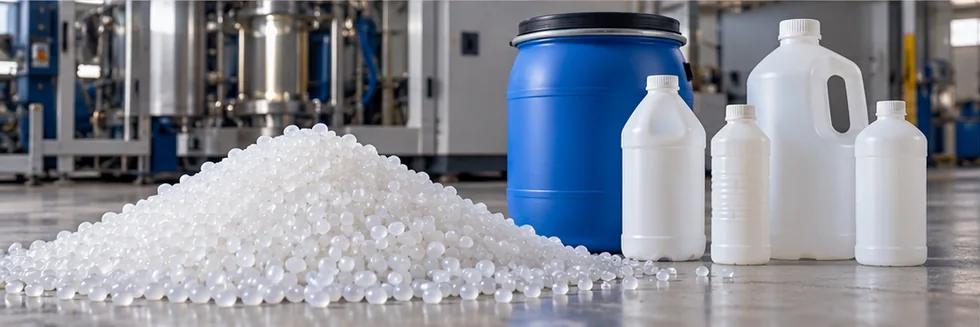
HDPE Blow Molding Grade is formulated to extrude a stable hollow parison before inflation in a mold. Melt strength, parison stability, molecular-weight distribution, ESCR, and top-load strength determine which containers a resin can make reliably. Household bottles and industrial drums place different demands on those properties, so the same polymer family contains several commercially distinct grades.
Key Applications & Industrial Demand
Detergent bottles, lubricant containers, chemical packaging, jerrycans, and drums are major outlets. Container makers seek uniform walls, resistance to cracking, and adequate stacking strength. Packaging approvals and the chemical inside the container may restrict which resin substitutions are acceptable.
Key Factors Influencing HDPE Blow Molding Grade Price Movements
- Parison Processing: Melt strength and parison stability affect wall distribution and scrap, particularly in large containers that remain hot while the parison is formed.
- Container Durability: ESCR and top-load strength influence whether packaging can tolerate detergents, chemical exposure, stacked loads, and extended storage without failure.
- Resin Architecture: Molecular-weight distribution, density, and stabilization change processing windows and application approval, creating grade premiums beyond a broad polyethylene benchmark.
How to Interpret HDPE Blow Molding Grade Pricing Data
Per-ton or per-kilogram resin quotations should identify the blow-molding grade and test basis. Compare environmental stress-crack performance and density as well as flow. Drum, bottle, and food-packaging specifications can justify different prices even when all offers are labeled HDPE.
Further reading: Chevron Phillips Polyethylene for Blow Molding
Frequently Asked Questions About HDPE blow molding grade
What drives price changes for HDPE Blow Molding Grade?
Ethylene economics, resin outages, bottle and drum demand, and import availability shape prices. Specialized high-ESCR material can remain tight despite ample general HDPE.
How do quality or specification differences affect HDPE Blow Molding Grade pricing?
Flow, density, melt strength, ESCR, impact performance, and packaging approvals determine value. A resin that extrudes poorly can create expensive wall-thickness variation.
Why can local HDPE Blow Molding Grade prices differ from global benchmarks?
Freight, duties, warehouse stock, customer approvals, and the availability of a specific bottle or drum grade influence local prices and substitution options.