


Understanding Food-grade plastic trays Prices
Market Overview & Supply Chain Dynamics
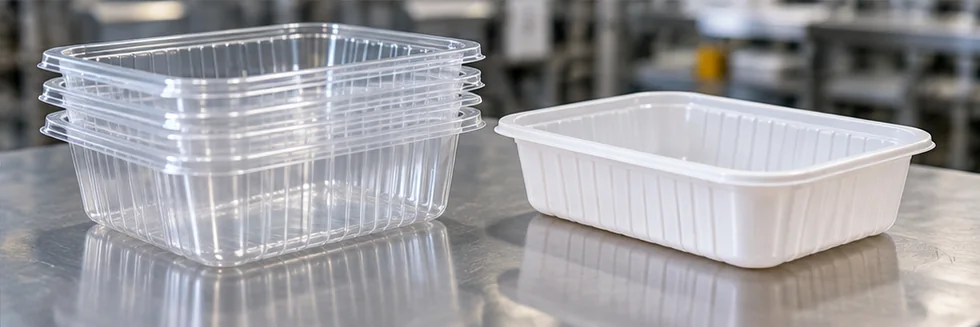
Food-Grade Plastic Trays are designed around polymer identity, wall distribution, lid compatibility, and temperature qualification. Thermoforming is common, although other molding routes also supply trays. Food-contact suitability depends on the material and intended conditions, not appearance alone. A clear PET produce tray, a PP meal tray, and a high-temperature specialist tray can therefore have substantially different constructions and prices.
Key Applications & Industrial Demand
Fresh produce, meat, bakery items, prepared meals, and institutional foodservice use trays matched to product and filling conditions. Barrier, venting, absorbent inserts, and sealing may add requirements. Microwave or oven suitability should be established for the actual product rather than inferred from a food-grade label.
Key Factors Influencing Food-Grade Plastic Trays Price Movements
- Resin and Sheet Inputs: Polymer identity, recycled content where qualified, sheet extrusion, gauge, and thermoforming yield influence the base cost of a tray.
- Structural and Sealing Design: Wall distribution, stiffness, lid compatibility, seal flange, compartment geometry, and denesting influence protection and filling-line productivity.
- Intended-Use Qualification: Temperature qualification, food contact, barrier, cleanliness, traceability, and customer tests can restrict substitution among apparently similar containers.
How to Interpret Food-Grade Plastic Trays Pricing Data
Trays commonly price per piece or thousand pieces. Compare material, weight, dimensions, compartments, lid, barrier, and intended temperature. A lightweight tray can be economical only if it meets filling, sealing, transport, and food-contact requirements without additional rejects.
Further reading: FDA Food-Packaging and Recycled-Plastic Considerations
Frequently Asked Questions About Food-grade plastic trays
What Drives Price Changes for Food-Grade Plastic Trays?
Resin, sheet, energy, tooling, forming yield, food production, and freight influence prices. Barrier and temperature-qualified trays can follow different demand from standard produce packaging.
How Do Quality or Specification Differences Affect Food-Grade Plastic Trays Pricing?
Polymer, weight distribution, stiffness, sealing surface, cleanliness, temperature limits, and food-use qualification matter. Similar capacity does not establish identical hot-fill or microwave performance.
Why Can Local Food-Grade Plastic Trays Prices Differ From Global Benchmarks?
Local forming, bulky freight, duties, molds, approved materials, lids, and filling-line demand affect prices. Custom tray geometry may require tooling and minimum production volumes.