
Price CloudO3GLOBAL COMMODITY MARKETS
English (US) Language
Ferromanganese icon
STEEL AND FERROUS METALS · SOURCES REPORT DIFFERENT PRICE TYPES

Ferromanganese Latest Prices

Ferromanganese prices explained through manganese assay, carbon grades, deoxidation, sulfur control, lump sizing, and alloy-smelting costs.

Download history CSV ↓
Price series · 2

Price series — Ferromanganese

Sources report different price types Sources may update at different intervals

Exact item match: 0Related benchmark: 2Within recorded date window: 2Outside date range: 0No latest observation: 0Live reference: 0
Clear filters
Showing 1–2 of 2 Price seriesPage 1 / 1
Price series Ferromanganese
Provider / SourceCountry / market / CurrencyLatest priceObserved date / published periodFrequencyMappingStatusSource
MadeInChina.PublicSupplierFerromanganeseyaojiuzhou.en.made-in-china.com:2092056582MadeInChina.PublicSupplier CN · HAINAN YAOJIUZHOU IMPORT AND EXPORT CO., LTD.; public supplier offerUSD / ton 1,000.00 – 1,450.00USD / ton 10/24/2026First recorded (UTC)Last recorded by crawler: Supplier advertised quantity tierCurrent price · Reference snapshot
Series detailsAdvertised product title: China Factory Low Carbon Mn80 Ferro Manganese Granules for Efficient DeoxidationNative sku: 2092056582Quantity from: 20Quantity to: not_statedQuantity upper bound: stated_range_or_minimumSource quantity and unit: 20 Tons(MOQ)Supplier: HAINAN YAOJIUZHOU IMPORT AND EXPORT CO., LTD.Supplier property:C: ≤0.4%Supplier property:Carbon Content: Medium CarbonSupplier property:Color: Silver GraySupplier property:HS Code: 72021100Supplier property:Model NO.: LC-FeMnSupplier property:Origin: HenanSupplier property:P: ≤0.3%Supplier property:Product Type: LumpSupplier property:S: ≤0.02%Supplier property:Si: ≤0.7%Supplier property:Size: 10-70mmSupplier property:Specification: Mn80Supplier property:Trademark: HAINAN YAOJIUZHOU IMPORT AND EXPORT CO., LTD.Supplier property:Transport Package: 1mt Big Bags or 25kg Small Bags Into 1mt Big Bag.Supplier property:Uses: MetallurgyPublication effective date not disclosedNo historical daily prices generatedSupplier advertised not completed transactionConditional quantity tier or price rangeSupplier claims not independently certifiedCatalog mapping benchmark specific supplier spec retainedFreight tax delivery terms not inferredSource ton basis not converted to metric or short ton
Related benchmark Within recorded date window Source ↗History
SMM.PublicAssessmentFerromanganese202308100001SMM.PublicAssessment CN · High-Carbon Ferromanganese (FeMn65C7.0)USD / t 674.90USD / t 11/18/2026 Published physical market assessmentDaily · Published period
Series detailsAssessment name: High-Carbon Ferromanganese (FeMn65C7.0)Native assessment id: 202308100001Publisher underlying unit: yuan/tonneSource published unit: USD/tonneMarket assessment benchmark not individual purchase offerSource published average and boundsLatest public assessment only no generated historyTax and unstated delivery terms not assumedProvider publishes USD display converted from CNY original CNY amount not in response
Related benchmark Within recorded date window Source ↗History

Price history

Each source has its own currency and unit · Sources may update at different intervals
No data in this range. View full history →

Historical price table

Actual publication periods; missing periods are not interpolated
0 records
Price history Ferromanganese — Each source has its own currency and unit
PeriodPrice (Each source has its own currency and unit)Source
No records in this range.

Definition: An iron-manganese ferroalloy used to add manganese and assist steelmaking reactions.

Key Specifications and Terms:

Understanding Ferromanganese Prices
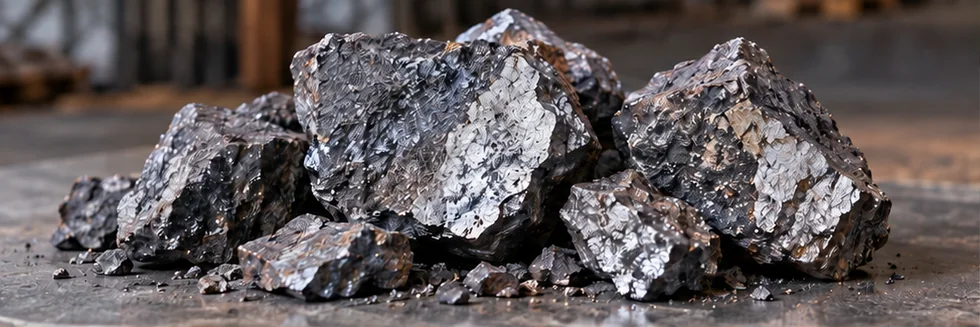
Dark metallic ferromanganese alloy lumps
Illustrative image for the Ferromanganese market guide.

Market Overview & Supply Chain Dynamics

Ferromanganese is smelted from manganese-bearing feed with iron and reductants, then cast and sized. Manganese assay, carbon grade, lump size, and impurities distinguish products used for deoxidation and sulfur control. High-carbon material is not interchangeable with low-carbon grades in every steel recipe. Ore chemistry and refining effort therefore affect the price of saleable manganese units.

Key Applications & Industrial Demand

Carbon, alloy, and specialty-steel producers use ferromanganese to achieve the required composition and metallurgical balance. Purchasers match carbon and impurity contributions to the steel grade. Furnace recovery and dissolution behavior influence the amount of alloy needed in practice.

Key Factors Influencing Ferromanganese Price Movements

  • Ore and Smelting Costs: Manganese ore, reductants, electricity, and furnace operating rates affect alloy supply, with refining adding cost to lower-carbon material.
  • Contained-Metal Specification: Manganese assay and carbon grade govern usable additions, while phosphorus, sulfur, and other impurities can restrict applications in demanding steels.
  • Charging Performance: Lump size and consistency affect dissolution and recovery, changing the cost of effective deoxidation and sulfur control within a steelmaking recipe.

How to Interpret Ferromanganese Pricing Data

Ferromanganese may be quoted per ton of alloy or on a contained-manganese basis. State carbon grade, assay, impurities, sizing, and freight. A high-carbon benchmark cannot represent a refined low-carbon alloy without accounting for its different chemistry and processing.

Further reading: USGS Manganese Industry Information

Frequently Asked Questions About Ferromanganese

What Drives Price Changes for Ferromanganese?

Manganese-ore costs, electricity, furnace utilization, steel output, and alloy stocks drive prices. Low-carbon refining capacity can create a distinct premium.

How Do Quality or Specification Differences Affect Ferromanganese Pricing?

Manganese content, carbon, phosphorus, sulfur, sizing, and consistency determine value. Steelmakers pay for chemistry that fits their grade without adding costly unwanted elements.

Why Can Local Ferromanganese Prices Differ From Global Benchmarks?

Power tariffs, ore access, inland freight, duties, and local steel grades influence prices. A consuming region's preference for certain carbon levels can change its alloy premium.