


Understanding Expanded polystyrene (EPS) Prices
Market Overview & Supply Chain Dynamics
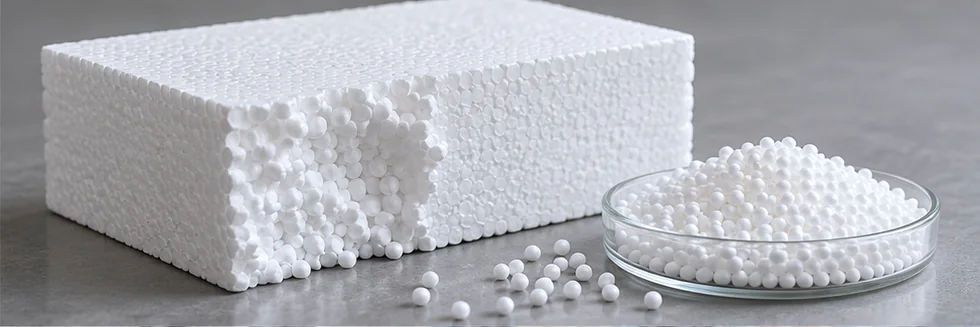
Expanded Polystyrene (EPS) is a cellular material made from expandable beads through steam expansion and molding. Foam density, thermal conductivity, and flame-retardant grade define important commercial differences. Raw expandable resin and finished foam are separate trading stages. A board's price reflects bead input, expansion yield, molding, cutting, and storage, while bulky finished products can be expensive to move relative to their weight.
Key Applications & Industrial Demand
Building insulation, protective packaging, insulated food boxes, and shaped cushioning use EPS. Construction buyers evaluate thermal and mechanical performance, while packaging users focus on protection, shape, and density. Graphite-enhanced and other specialized formulations may achieve different insulation performance from ordinary white foam.
Key Factors Influencing Expanded Polystyrene (EPS) Price Movements
- Bead and Blowing-Agent Supply: Styrene costs, expandable beads production, blowing-agent retention, and storage age influence the yield and economics of foam manufacturing.
- Foam Performance: Foam density and thermal conductivity determine insulation value, while a flame-retardant grade requires an appropriate product formulation and application qualification.
- Expansion and Freight: Steam expansion energy, molding productivity, cutting losses, and the transport of high-volume finished foam shape local delivered prices.
How to Interpret Expanded Polystyrene (EPS) Pricing Data
Determine whether the quotation covers resin beads, molded parts, or finished boards. Resin often uses metric tons; insulation may be per cubic meter, square meter, or sheet. Thickness, density, fire classification, and dimensions must be consistent before comparing board prices.
Further reading: BASF Polystyrene and EPS Resources
Frequently Asked Questions About Expanded polystyrene (EPS)
What drives price changes for Expanded Polystyrene (EPS)?
Styrene and bead costs, energy, construction-insulation orders, and packaging demand influence prices. Finished-foam values also depend heavily on molding and delivery distance.
How do quality or specification differences affect Expanded Polystyrene (EPS) pricing?
Density, thermal conductivity, compressive performance, bead fusion, fire classification, and dimensions matter. Equal thickness does not guarantee equal insulation or load-bearing performance.
Why can local Expanded Polystyrene (EPS) prices differ from global benchmarks?
Finished EPS is bulky, making local molding, freight, warehouse space, and cutting services significant. Raw-resin benchmarks exclude those conversion and delivery costs.