


Understanding Copper wire rod Prices
Market Overview & Supply Chain Dynamics
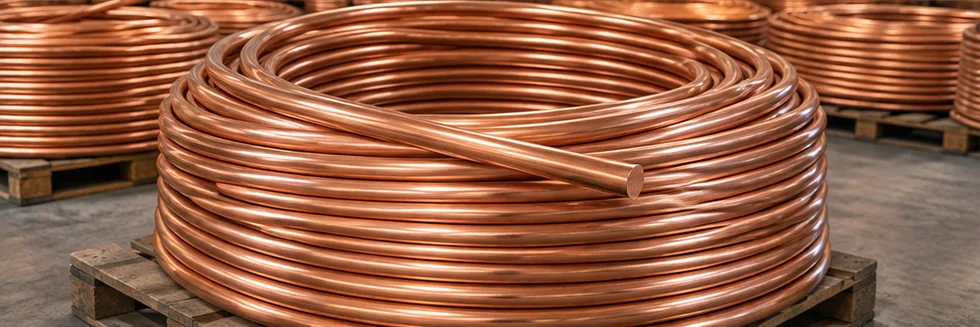
Copper Wire Rod is cast and rolled from refined copper into coils for wire drawing. Conductivity, oxygen content, drawability, surface quality, and rod diameter define commercially important differences. The rod premium pays for conversion and quality control beyond cathode metal. Oxygen-bearing and oxygen-free products have different processing routes and should not be collapsed into a single undifferentiated copper price.
Key Applications & Industrial Demand
Power cables, building wire, winding wire, communications products, and other conductor applications use qualified rod. Fine-wire drawers are particularly sensitive to surface defects and inclusions. Buyers require stable electrical and mechanical performance over long continuous drawing runs.
Key Factors Influencing Copper Wire Rod Price Movements
- Copper Metal Basis: Refined-copper cost forms the largest input, while financing, physical cathode premiums, and metal availability influence the rod mill's purchasing economics.
- Drawing Performance: Drawability, surface quality, and rod diameter determine line stability and wire-break rates, creating value beyond gross copper content.
- Electrical Grade: Conductivity and oxygen content distinguish conductor products, with oxygen-free requirements or demanding fine-wire applications adding production and qualification costs.
How to Interpret Copper Wire Rod Pricing Data
Wire-rod offers often use an agreed copper benchmark plus a fabrication premium per metric ton. Align benchmark period, oxygen grade, diameter, taxes, and delivery. A cathode price excludes casting, rolling, testing, and the reliability needed for wire drawing.
Further reading: USGS Copper Uses and Industry
Frequently Asked Questions About Copper wire rod
What Drives Price Changes for Copper Wire Rod?
Copper metal values, cathode premiums, energy, rod-mill utilization, and cable demand influence prices. High-quality rod premiums can change separately from the metal benchmark.
How Do Quality or Specification Differences Affect Copper Wire Rod Pricing?
Conductivity, oxygen grade, inclusions, surface condition, dimensions, and drawability matter. Fine-wire customers may require tighter quality than ordinary building-wire applications.
Why Can Local Copper Wire Rod Prices Differ From Global Benchmarks?
Local casting capacity, cathode freight, duties, financing, delivery distance, and cable orders affect premiums. Qualified rod availability can be more important than a small benchmark-price difference.