


Understanding Construction sand Prices
Market Overview & Supply Chain Dynamics
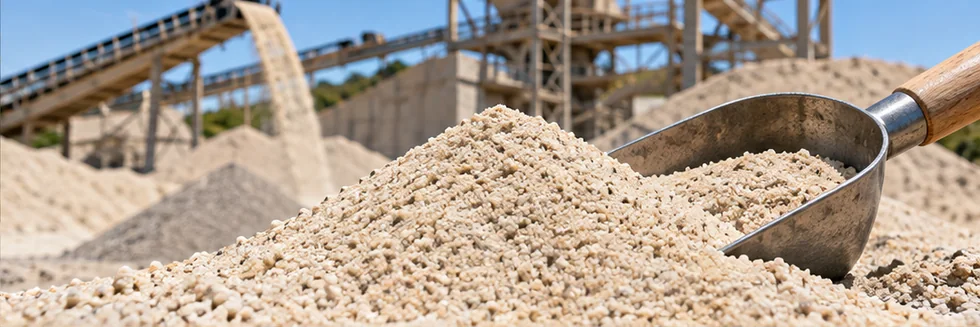
Construction Sand is a fine aggregate whose grading, fines content, chloride, and moisture bulking influence the quantity and quality a buyer receives. Extraction, screening, and washing create products for concrete, mortar, or fill rather than a single undifferentiated sand market. Deposit quality and legal access to supply can strongly affect local availability. Clean-looking sand still needs the tests appropriate to its application.
Key Applications & Industrial Demand
Concrete plants, mortar makers, precasters, and builders purchase sand matched to their mixes. Fill and bedding uses can tolerate characteristics unsuitable for structural concrete. Aggregate mineralogy and contaminants also affect durability, so appearance alone cannot establish acceptance.
Key Factors Influencing Construction Sand Price Movements
- Deposit Access: Extraction permits, deposit availability, seasonal water conditions, and transport routes influence supply of naturally occurring construction sand.
- Mix Compatibility: Grading, fines content, chloride, and other contaminants affect water demand, reinforcement durability, and acceptance in concrete or mortar.
- Dry-Quantity Economics: Moisture bulking, washing, loading, and haulage determine usable dry aggregate delivered, creating differences between loose cubic-meter and weighed-ton offers.
How to Interpret Construction Sand Pricing Data
Sand can be quoted per ton or cubic meter. State whether volume is loose or compacted and account for moisture and bulk density. Delivered concrete-grade sand should not be compared with unwashed fill without recognizing quality and dry-yield differences.
Further reading: USGS Construction Sand and Gravel Information
Frequently Asked Questions About Construction sand
What Drives Price Changes for Construction Sand?
Extraction access, quarry or river conditions, washing capacity, fuel, and local building activity influence prices. Transport disruptions can rapidly affect a region with few approved deposits.
How Do Quality or Specification Differences Affect Construction Sand Pricing?
Grading, clay and silt, chloride, organics, mineralogy, moisture, and durability tests matter. Sand acceptable for fill may be inappropriate for reinforced concrete.
Why Can Local Construction Sand Prices Differ From Global Benchmarks?
Haul distance, loading, washing, truck access, permits, and local demand affect prices. Sand's low value relative to weight makes freight a large part of delivered cost.