


Understanding Coated calcium carbonate Prices
Market Overview & Supply Chain Dynamics
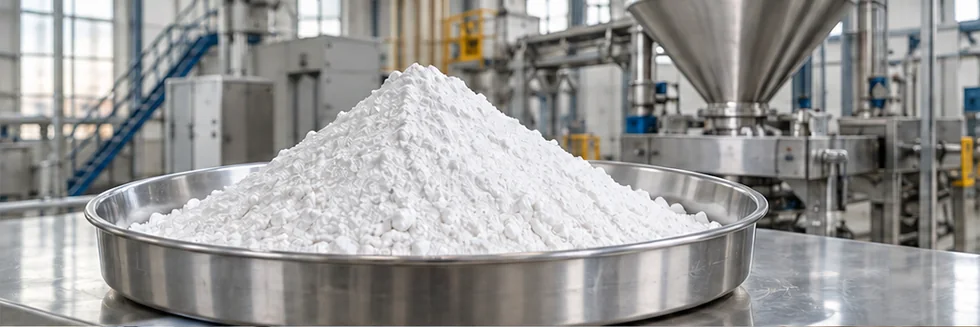
Coated Calcium Carbonate is a mineral filler modified by surface treatment, often a stearate coating, for use in polymer compounds. Grinding or precipitation establishes particle-size distribution before treatment and drying. Whiteness, coating consistency, moisture, and dispersion influence its commercial value. The product is therefore more than low-cost limestone powder: a poorly controlled coating can change extrusion stability, film appearance, or the mechanical performance of a compound.
Key Applications & Industrial Demand
PVC compounds, polyolefin masterbatches, films, pipes, profiles, and selected rubber products use coated carbonate. Customers seek filler loading, stiffness, surface quality, and economical processing. The best grade depends on the matrix and conversion process rather than simply the highest mineral purity.
Key Factors Influencing Coated Calcium Carbonate Price Movements
- Micronizing Requirements: Fine grinding, classification, and narrow particle-size distribution add processing costs and determine suitability for thin films or demanding surface finishes.
- Coating Chemistry: Surface treatment and stearate coating dosage affect compatibility, dispersion, and processing behavior, creating separate markets for apparently similar mineral powders.
- Optical Consistency: Whiteness, moisture control, and lot uniformity matter when fillers enter light-colored compounds or high-loading masterbatches with limited tolerance for defects.
How to Interpret Coated Calcium Carbonate Pricing Data
Offers are commonly per metric ton in sacks or big bags. Compare particle-size distribution, coating chemistry, moisture, and whiteness alongside assay. A cheaper uncoated powder may require additional treatment and can impose a different resin or additive consumption.
Further reading: Omya Polymer and Mineral Solutions
Frequently Asked Questions About Coated calcium carbonate
What drives price changes for Coated Calcium Carbonate?
Grinding energy, coating inputs, packaging, transport, and polymer-compounding demand influence prices. Ultra-fine grades require more processing than ordinary mineral filler.
How do quality or specification differences affect Coated Calcium Carbonate pricing?
Particle distribution, top cut, coating type, moisture, whiteness, and dispersion separate grades. These properties influence processing and defects more directly than carbonate assay alone.
Why can local Coated Calcium Carbonate prices differ from global benchmarks?
Mineral freight, local grinding capacity, surface-treatment availability, bagging, and converter demand affect delivered cost. Nearby qualified production can outperform a cheaper distant powder.