


Understanding Bentonite Prices
Market Overview & Supply Chain Dynamics
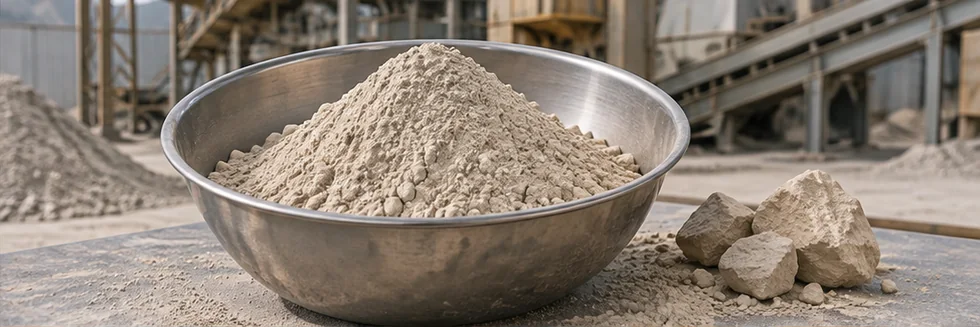
Bentonite is a clay material rich in montmorillonite, with swelling, rheology, and bonding strength varying by deposit and processing. Sodium activation can alter suitable calcium bentonites, while drying and milling establish the commercial product. Drilling, foundry, sealing, and absorbent grades therefore occupy different markets. A ton of ordinary clay does not necessarily provide the performance of an activated or application-qualified bentonite.
Key Applications & Industrial Demand
Drilling fluids, foundry molds, iron-ore pellets, geosynthetic liners, and absorbent products use selected bentonites. Customers evaluate the behavior needed in water, sand, or another matrix. High swelling alone does not establish suitability for every suspension or binding application.
Key Factors Influencing Bentonite Price Movements
- Deposit and Activation: Montmorillonite content, ore variability, sodium activation, and mining conditions affect the attainable product and the cost of performance adjustment.
- Application Performance: Swelling, rheology, and bonding strength determine acceptance in liners, drilling fluids, foundry sand, or ore pelletizing, creating distinct specifications.
- Processing and Transport: Drying, milling, moisture, granulation, packaging, and bulky mineral freight influence the delivered cost of an accepted bentonite grade.
How to Interpret Bentonite Pricing Data
Bentonite is commonly quoted per metric ton of powder or granule. Compare the intended application, test method, moisture, activation, and particle form. Laboratory swelling, drilling-fluid viscosity, and foundry-bond tests describe different performance requirements rather than one universal grade number.
Further reading: USGS Clay Types and Industrial Applications
Frequently Asked Questions About Bentonite
What Drives Price Changes for Bentonite?
Mine output, activation inputs, drying energy, drilling, foundry demand, and ore-pellet production influence prices. Specialized performance grades can follow separate balances.
How Do Quality or Specification Differences Affect Bentonite Pricing?
Mineralogy, swelling, rheology, bonding, moisture, particle size, and treatment matter. Different deposits can produce materials that are not interchangeable despite similar bulk appearance.
Why Can Local Bentonite Prices Differ From Global Benchmarks?
Deposit location, drying capacity, bagging, freight, duties, and local application demand affect prices. Mineral transport can outweigh small differences in quarry cost.