


Understanding Beef tenderloin Prices
Market Overview & Supply Chain Dynamics
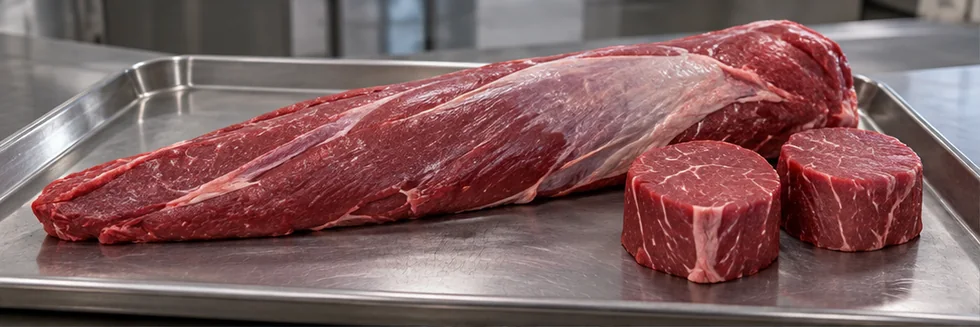
Beef Tenderloin is centered on the psoas major and valued for tenderness. Silver skin and chain removal define important trim differences, while portion yield determines how many uniform steaks a whole piece provides. Aging, grade, and temperature state add further distinctions. A fully trimmed center-cut steak therefore represents a different product from an untrimmed whole tenderloin.
Key Applications & Industrial Demand
Steakhouses, premium retail, catering, and hospitality buyers purchase tenderloin for controlled portions and tenderness. Restaurants balance its premium against trimming losses, end pieces, and the limited supply of this muscle from each carcass.
Key Factors Influencing Beef Tenderloin Price Movements
- Anatomical Scarcity: Limited psoas major output per carcass makes tenderloin supply dependent on total cattle processing rather than demand for this cut alone.
- Trim and Steak Recovery: Silver skin, chain removal, size, and portion yield determine fabrication labor and the cost of consistent steaks.
- Premium Dining Demand: Aging, grade, foodservice bookings, retail promotions, and holiday purchasing influence demand for premium tenderloin presentations.
How to Interpret Beef Tenderloin Pricing Data
Compare currency per kilogram for whole or portioned product, grade, size, chain status, and trim. Calculate cost per saleable steak rather than gross weight alone. Fresh chilled and frozen tenderloins should retain their separate handling and storage conditions.
Further reading: USDA: Institutional Meat Purchase Specifications
Frequently Asked Questions About Beef tenderloin
What drives price changes for Beef Tenderloin?
Cattle processing, premium-dining demand, grade availability, steak-size requirements, and holiday orders influence tenderloin prices.
How do quality or specification differences affect Beef Tenderloin pricing?
Grade, size, trim, chain status, aging, center-cut yield, and fresh or frozen condition determine the value of each offer.
Why can local Beef Tenderloin prices differ from global benchmarks?
Specialist trimming, portioning, chilled freight, import costs, dining demand, and retail presentation create premiums beyond carcass-beef values.