


Understanding Aluminum electrolytic capacitors Prices
Market Overview & Supply Chain Dynamics
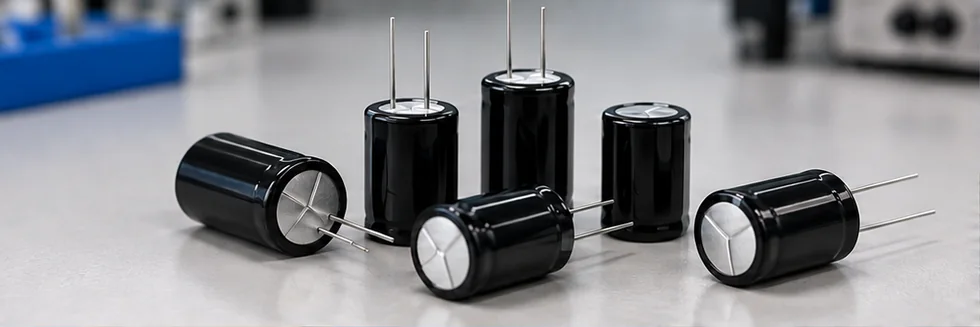
Aluminum electrolytic capacitors use etched aluminum foil, an oxide dielectric, separators, and an electrolyte assembled into a sealed case. ESR, ripple current, rated life, and polarity are fundamental purchasing distinctions. Electrolyte chemistry, vent design, lead arrangement, and case dimensions affect both electrical behavior and the ability to fit an existing board. A capacitance-and-voltage label omits many of the characteristics that determine service life in a hot power supply.
Key Applications & Industrial Demand
Power supplies, motor drives, audio equipment, inverters, and industrial controls use these capacitors for energy storage and smoothing. Repair markets often need exact dimensions and terminal spacing, while production buyers qualify a capacitor around ripple loading, ambient temperature, expected operating hours, and mechanical installation.
Key Factors Influencing Aluminum Electrolytic Capacitors Price Movements
- Ripple and ESR Requirements: Lower ESR and higher ripple current capability require electrical and thermal construction suited to power-conversion duty rather than simple bulk storage.
- Lifetime Construction: Electrolyte selection, seal quality, rated life, temperature class, and vent arrangements influence reliability and the cost of qualification.
- Case and Terminal Availability: Snap-in, screw-terminal, radial, and surface-mount constructions serve different equipment, with local availability affected by repair and production demand.
How to Interpret Aluminum Electrolytic Capacitors Pricing Data
Prices are typically per capacitor or packaged lot. Compare capacitance, voltage, case dimensions, ripple specification, and life conditions together. A high-temperature long-life capacitor and a basic general-purpose device are different procurement items even when their microfarad values match; replacement labor can exceed the component saving.
Further reading: Nichicon: Aluminum Electrolytic Capacitor Technical Notes
Frequently Asked Questions About Aluminum electrolytic capacitors
What drives price changes for Aluminum Electrolytic Capacitors?
Aluminum foil processing, electrolyte supply, power-electronics orders, case construction, and reliability-grade demand affect capacitor purchasing costs.
How do quality or specification differences affect Aluminum Electrolytic Capacitors pricing?
ESR, ripple capability, rated life, temperature, case dimensions, and terminal construction determine whether capacitors serve equivalent operating conditions.
Why can local Aluminum Electrolytic Capacitors prices differ from global benchmarks?
Bulky shipping, repair urgency, specialty case sizes, small orders, and distributor inventory can create premiums over factory contracts.