


Understanding 8-bit microcontroller Prices
Market Overview & Supply Chain Dynamics
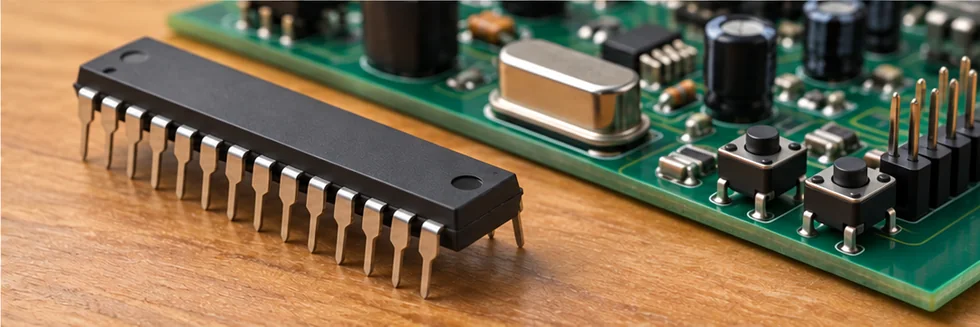
An 8-bit microcontroller combines an 8-bit core, program memory, timers, and GPIO in a compact control IC. These devices remain useful for modest control tasks where deterministic behavior, familiar tools, and inexpensive boards matter more than extensive computing throughput. Sleep current and the selected package can be decisive in small battery products. Manufacturing costs also depend on memory type, analog functions, test requirements, and product longevity.
Key Applications & Industrial Demand
Appliance interfaces, simple sensors, remote controls, toys, lighting controllers, and low-complexity industrial boards use 8-bit devices. Buyers often maintain mature firmware and tooling across long production runs. A device's ecosystem and pin arrangement can preserve demand even when a newer architecture offers more computing power.
Key Factors Influencing 8-bit Microcontroller Price Movements
- Memory and Peripherals: Program memory capacity, timers, analog channels, and communication interfaces determine die requirements and the external components a design can eliminate.
- Package and Low-Power Design: GPIO availability, miniature packaging, supply-voltage tolerance, and sleep current affect fit in compact or battery-operated consumer products.
- Mature-Product Availability: Wafer allocations, lifecycle commitments, installed firmware, and the cost of changing programming tools influence continued demand for older controller families.
How to Interpret 8-bit Microcontroller Pricing Data
Compare quotations per individual IC after accounting for pack or reel counts. OTP, flash, and EEPROM-equipped variants may serve different production needs. Pin count, supply-voltage range, package footprint, and programming requirements should accompany the device code; a board containing an 8-bit controller is a different product from the bare IC.
Further reading: Microchip: 8-bit Microcontrollers
Frequently Asked Questions About 8-bit microcontroller
What drives price changes for 8-bit Microcontroller?
Memory configuration, package output, mature-node capacity, established appliance demand, and lifecycle supply commitments affect chip pricing.
How do quality or specification differences affect 8-bit Microcontroller pricing?
Program memory, peripheral mix, low-power operation, temperature rating, and programming technology create distinct purchasing specifications.
Why can local 8-bit Microcontroller prices differ from global benchmarks?
Cut-tape stock, preprogramming, distributor traceability, small quantities, and taxes differ from high-volume factory reel purchases.