


Understanding Whole tiger prawns Prices
Market Overview & Supply Chain Dynamics
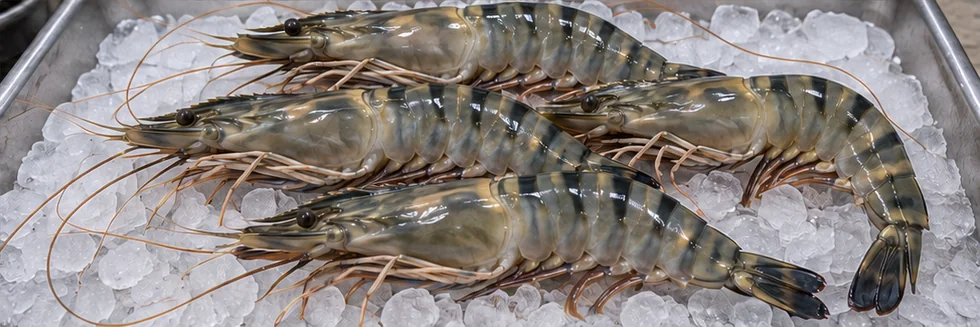
Whole Tiger Prawns are generally Penaeus monodon supplied with a banded shell and intact head. Size count, head firmness, and shell hardness distinguish premium whole lots from mixed or soft-shell harvests. Buyers should retain farmed or wild origin where declared and should not substitute whiteleg shrimp simply because both products are sold under broad prawn terminology.
Key Applications & Industrial Demand
Premium seafood restaurants, whole-grill dishes, retail counters, and selected export programs value large attractive prawns. Processing buyers can use different grades, but must account for head and shell losses when valuing edible meat.
Key Factors Influencing Whole Tiger Prawns Price Movements
- Species and Appearance: Penaeus monodon identity, banded shell appearance, color, and uniform size count influence premium whole-prawn demand.
- Harvest Condition: Head firmness, shell hardness, molt stage, handling damage, and chilling determine marketable quality.
- Large-Prawn Availability: Crop duration, survival, harvest timing, capture supply where relevant, and restaurant orders affect the supply of desired sizes.
How to Interpret Whole Tiger Prawns Pricing Data
Read prices per kilogram or net box using species, count convention, origin, preservation, and whole presentation. A count per pound differs from count per kilogram. Frozen glazed product also needs a declared net-prawn basis before comparison with chilled whole prawns.
Further reading: EUMOFA: Penaeus Shrimp Species Profiles
Frequently Asked Questions About Whole tiger prawns
What drives price changes for Whole Tiger Prawns?
Harvest size, large-prawn availability, survival, premium seafood demand, and export orders influence tiger-prawn prices.
How do quality or specification differences affect Whole Tiger Prawns pricing?
Species, size, head firmness, shell hardness, appearance, origin, and chilled or frozen state distinguish lots.
Why can local Whole Tiger Prawns prices differ from global benchmarks?
Large-size selection, handling losses, chilled logistics, import access, and local preference for whole prawns create premiums.