


Understanding Whole clams Prices
Market Overview & Supply Chain Dynamics
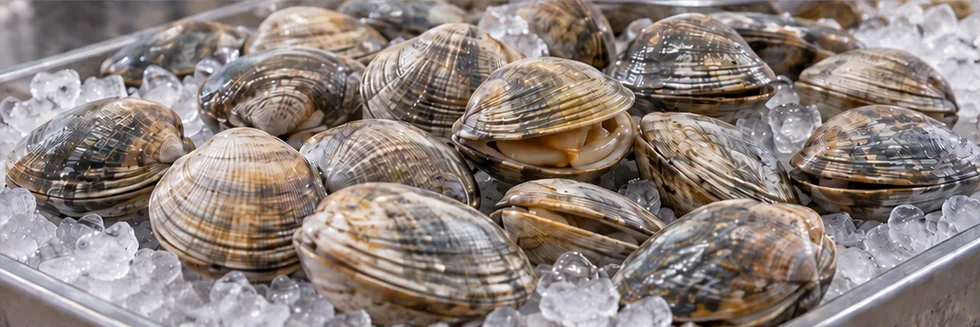
Whole Clams retain their shells, so species identity and meat yield strongly affect value per edible portion. In live trade, shell closure and survival matter through delivery. Harvest area traceability and depuration where applicable are part of the qualified supply chain. Live shellstock, frozen whole clams, and cooked products should remain separate commercial categories.
Key Applications & Industrial Demand
Restaurants, seafood counters, soups, and prepared dishes use clams by species, size, and condition. Presentation-focused live markets demand different handling from a processor extracting meat for further manufacture.
Key Factors Influencing Whole Clams Price Movements
- Biological and Harvest Supply: Species identity, harvest area availability, weather, and harvesting conditions determine qualified shellstock supply.
- Live Quality: Shell closure, survival, depuration, temperature, and handling influence the saleable proportion arriving at the buyer.
- Edible Recovery: Meat yield, shell size, season, cleaning, and culinary demand affect the value represented by whole-shell weight.
How to Interpret Whole Clams Pricing Data
Compare currency per kilogram or count for the specified species, caliber, live or preserved state, and net pack. Shell weight is not edible meat. Include mortality, purification, packing, and delivery timing when valuing live-shell shipments.
Further reading: FAO/Codex: Shellfish Processing and Handling
Frequently Asked Questions About Whole clams
What drives price changes for Whole Clams?
Harvest access, weather, species supply, live survival, purification capacity, and seafood demand influence clam prices.
How do quality or specification differences affect Whole Clams pricing?
Species, size, live condition, origin, cleanliness, meat yield, and preservation determine usable and marketable quality.
Why can local Whole Clams prices differ from global benchmarks?
Live transport, mortality, purification, traceability, local harvest closures, and species preferences create highly regional prices.