


Understanding Spot LNG Prices
Market Overview & Supply Chain Dynamics
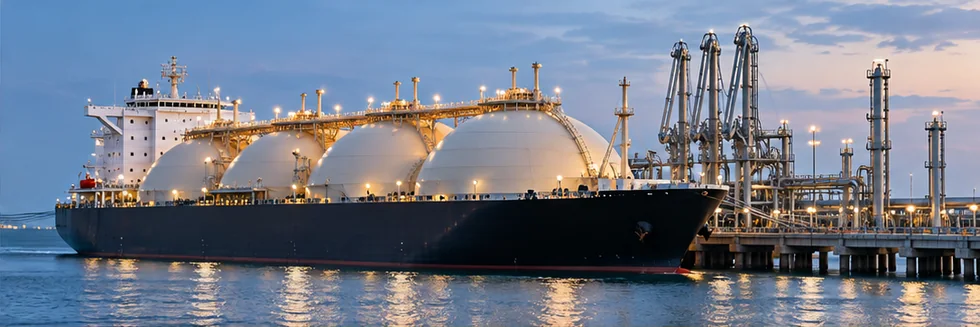
Spot LNG is a near-term purchase of natural gas delivered as a cryogenic liquid. Liquefaction, specialized shipping, cryogenic storage, and regasification connect gas fields with markets lacking direct pipeline links. Cargo window and boil-off management influence delivery economics. A spot cargo's value therefore depends on terminal access and timing as well as the gas market at either end of the voyage.
Key Applications & Industrial Demand
Utilities and gas marketers buy spot cargoes to cover heating demand, power-generation needs, outages, or gaps in contracted supply. Industrial buyers can also use trucked LNG, whose small-scale handling economics differ from an ocean cargo.
Key Factors Influencing Spot LNG Price Movements
- Export-Plant Availability: Liquefaction outages and feed-gas access change the number of cargoes available for prompt delivery.
- Destination Timing: The cargo window, import-terminal capacity, weather, and regasification demand determine how much a receiving market will pay.
- Cryogenic Voyage Costs: Shipping availability, cryogenic storage, voyage duration, and boil-off influence the delivered cost beyond the upstream gas price.
How to Interpret Spot LNG Pricing Data
International cargo assessments often use US dollars per MMBtu; domestic truck-delivered quotations may use local currency per metric ton. Convert energy carefully and identify loading versus delivered terms. Terminal fees and regasification are not always included in the headline LNG price.
Further reading: EIA: Liquefied Natural Gas
Frequently Asked Questions About Spot LNG
What drives price changes for Spot LNG?
Weather, gas storage, liquefaction outages, cargo availability, shipping, and import-terminal demand influence prompt LNG prices.
How do quality or specification differences affect Spot LNG pricing?
Heating value, composition, delivery window, parcel size, and terminal compatibility distinguish LNG cargoes. Mass and energy quotations require a stated conversion basis.
Why can local Spot LNG prices differ from global benchmarks?
Import access, regasification, storage, truck delivery, taxes, and regional gas balances create costs beyond an international cargo assessment.