


Understanding SMD resistors Prices
Market Overview & Supply Chain Dynamics
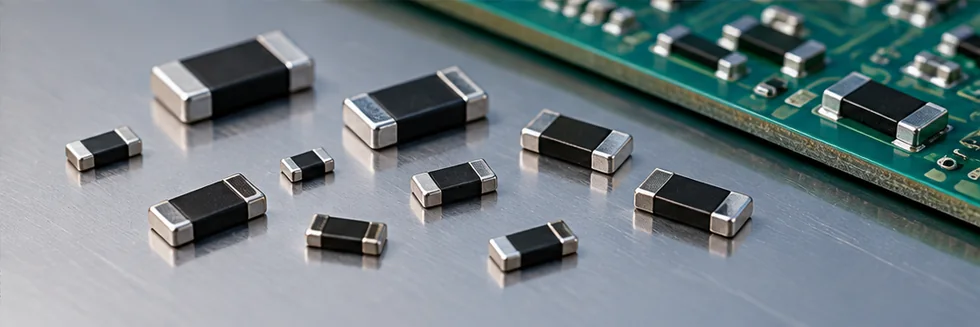
SMD resistors are deposited or formed on small substrates, terminated, tested, and supplied for automated circuit-board assembly. Resistance tolerance, temperature coefficient, power rating, and package size distinguish parts that may look identical in a purchasing list. Thick-film technology is common in general electronics; precision thin-film and current-sense constructions address different accuracy or dissipation needs. Packaging quality matters because reels must feed reliably into placement equipment.
Key Applications & Industrial Demand
Electronics assembly uses these resistors for biasing, voltage division, pull-ups, sensing, and signal conditioning. Consumption follows the number of resistor positions on each board and its specified resistance values, tolerances, and sizes. Precision instruments and automotive circuits impose additional stability and qualification requirements.
Key Factors Influencing SMD Resistors Price Movements
- Precision Construction: Tighter resistance tolerance and temperature coefficient require different materials, trimming, and testing from broad-tolerance thick-film products.
- Thermal and Package Design: Power rating, package size, termination durability, and pulse capability influence resistor suitability and the amount of board space needed.
- Assembly Volumes: Board production, demand for popular resistance values, automotive qualification, and reel packaging availability affect stock and large-lot prices.
How to Interpret SMD Resistors Pricing Data
Catalog prices can refer to a piece, strip, reel, or pack containing many resistors. Normalize the count, then retain resistance value, tolerance, size, and qualification grade. A low-ohm current-sense resistor or high-voltage precision part should not be compared with a general-purpose chip solely by package dimensions.
Further reading: Vishay: Resistors
Frequently Asked Questions About SMD resistors
What drives price changes for SMD Resistors?
Electronics assembly volumes, precision-grade demand, packaging capacity, and inventories of particular values and sizes shape resistor offers.
How do quality or specification differences affect SMD Resistors pricing?
Tolerance, temperature coefficient, power dissipation, pulse behavior, construction, and qualification distinguish commodity chips from precision resistors.
Why can local SMD Resistors prices differ from global benchmarks?
Reel breaking, small-value selections, local inventory, shipping, and handling often dominate the delivered cost of low-value individual resistors.