


Understanding Slab Prices
Market Overview & Supply Chain Dynamics
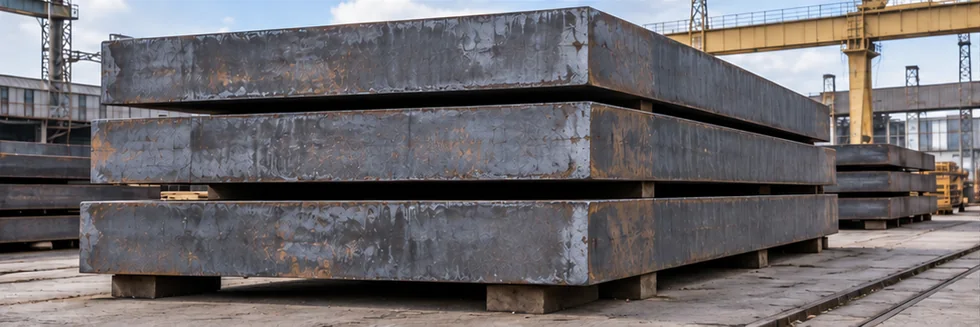
Slab is the wide steel semi-finished product supplied to flat-product rolling. Slab thickness, steel chemistry, surface conditioning, and internal soundness establish its commercial specification. Continuous casting produces material for hot strip or plate, while integrated mills may retain most output. Merchant slabs therefore trade according to the receiving mill's equipment and quality requirements rather than a universal unfinished-steel grade.
Key Applications & Industrial Demand
Hot-rolled coil, sheet, and plate producers convert slabs into products for construction, vehicles, machinery, and energy equipment. Some demanding flat grades require carefully controlled cast chemistry and internal quality. A basic slab cannot necessarily make exposed automotive sheet or high-specification plate.
Key Factors Influencing Slab Price Movements
- Caster and Melt-Shop Supply: Steelmaking inputs, caster uptime, and integrated consumption determine the volume of suitable slabs available to independent flat-product mills.
- Grade and Soundness: Steel chemistry and internal soundness influence rolling outcomes, while surface conditioning may add cost before a mill can use a cast slab.
- Dimension and Rolling Schedule: Slab thickness, width, length, and demand from flat-product rolling affect furnace loading, rolling efficiency, and the commercial value of available lots.
How to Interpret Slab Pricing Data
Slab offers are generally per metric ton with chemistry, width, thickness, length, and loading basis stated. Coil and plate prices include rolling value. Evaluate the usable slab width and any conditioning or cutting costs before comparing delivered feedstock economics.
Further reading: World Steel Association: Steelmaking and Flat Products
Frequently Asked Questions About Slab
What Drives Price Changes for Slab?
Steelmaking costs, hot-strip and plate margins, merchant availability, and bulk freight influence slab prices. Integrated mills can reduce outside sales when their own rolling demand strengthens.
How Do Quality or Specification Differences Affect Slab Pricing?
Chemistry, dimensions, internal soundness, segregation, and surface condition matter. Demanding flat-product applications may need substantially tighter cast quality than ordinary commercial plate.
Why Can Local Slab Prices Differ From Global Benchmarks?
Ocean freight, slab handling, port access, import duties, and a receiving mill's width and furnace limits affect value. Dimensionally unsuitable cheap slabs may have poor conversion economics.