


Understanding Rice in retail bags Prices
Market Overview & Supply Chain Dynamics
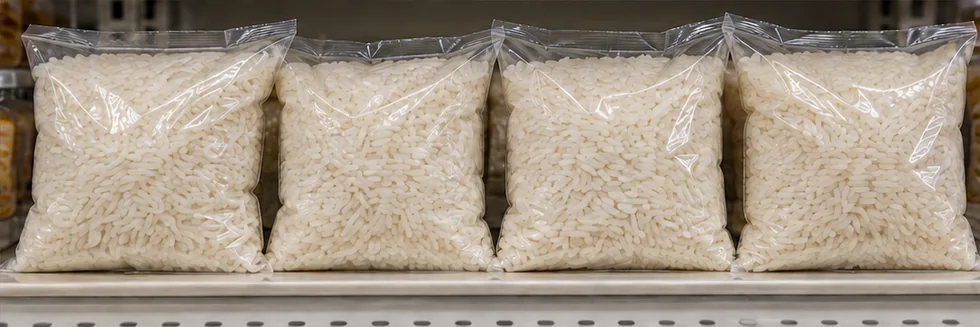
Rice in Retail Bags adds consumer packing and brand specification to a milled grain. Net pack weight, varietal blend, broken percentage, and crop age determine what is inside the bag. Barrier packaging helps protect against moisture and pests, while labeling and consistent sourcing make a retail product different from an unbranded bulk rice lot.
Key Applications & Industrial Demand
Households and small foodservice buyers choose rice for cooking texture, aroma, convenience, and familiar varieties. Promotional bag sizes and brand positioning can influence sales independently of movements in export rice values.
Key Factors Influencing Rice in Retail Bags Price Movements
- Grain Recipe: Varietal blend, broken percentage, crop age, and origin determine the cost and cooking consistency of the packaged rice.
- Pack Construction: Net pack weight, barrier packaging, printing, sealing, and small-pack handling add costs beyond loose grain.
- Retail Replenishment: Promotion, shelf placement, brand demand, distribution, and stock turnover influence the price actually paid for consumer bags.
How to Interpret Rice in Retail Bags Pricing Data
Compare local-currency cost per kilogram using net contents rather than bag appearance. Retain variety, blend, grain grade, and crop description. Consumer packs include bagging, distribution, merchandising, and taxes that are absent from a bulk mill or export quotation.
Further reading: USDA: Rice Quality and Inspection
Frequently Asked Questions About Rice in retail bags
What drives price changes for Rice in Retail Bags?
Underlying rice costs, packaging, distribution, promotions, brand demand, and retail inventory influence bagged-rice prices.
How do quality or specification differences affect Rice in Retail Bags pricing?
Variety, blend, aroma, broken content, crop age, pack weight, and packaging quality distinguish consumer products.
Why can local Rice in Retail Bags prices differ from global benchmarks?
Bagging, branding, freight, retail overhead, taxes, and promotional strategy add costs beyond bulk rice trade.