


Understanding rHDPE pellets Prices
Market Overview & Supply Chain Dynamics
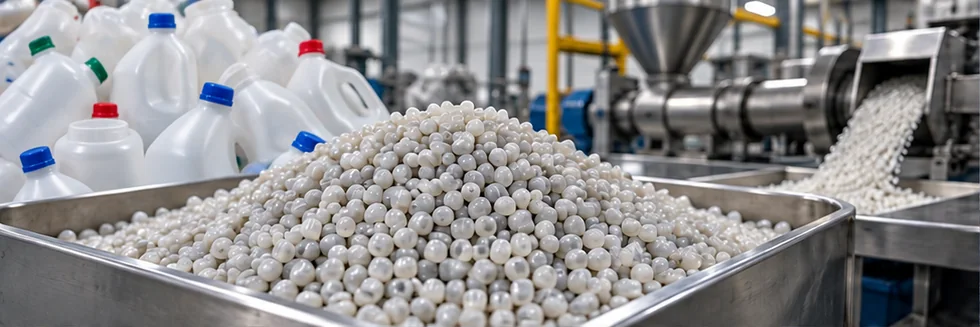
rHDPE Pellets are made by sorting, washing, melting, melt filtration, and pelletizing high-density polyethylene scrap. Feedstock origin, melt-flow consistency, odor, and color sorting determine which products the material can enter. Bottle-derived material differs from mixed industrial scrap, and a pellet's appearance alone does not establish its cleanliness or mechanical performance. Reliable recycled grades require control over repeated incoming streams.
Key Applications & Industrial Demand
Pipes for approved uses, crates, bins, non-food containers, profiles, and compounded products consume rHDPE. Buyers target a particular balance of stiffness, toughness, color, and processing. Direct food-contact or demanding pressure applications need their own qualification rather than a general recycled label.
Key Factors Influencing rHDPE Pellets Price Movements
- Collection Mix: Feedstock origin controls the blend of resin grades and contaminants, affecting stiffness, toughness, and the amount of sorting needed.
- Processing Consistency: Melt filtration and melt-flow consistency influence converter scrap, while poor dispersion or foreign polymers can destabilize molding or extrusion.
- Appearance Constraints: Odor and color sorting determine access to higher-value products, often creating a premium for consistent natural or light-colored recycled pellets.
How to Interpret rHDPE Pellets Pricing Data
Per-ton quotations should declare flow range, color, filler content, and feedstock category. Include the molding or extrusion reject rate when assessing cost. A virgin-HDPE benchmark does not capture collection, cleaning, and contamination-removal economics.
Further reading: Association of Plastic Recyclers
Frequently Asked Questions About rHDPE pellets
What Drives Price Changes for rHDPE Pellets?
Waste-plastic collection, sorting costs, virgin HDPE competition, and converter demand influence rHDPE. Consistent natural-color material can remain scarce even when mixed scrap is abundant.
How Do Quality or Specification Differences Affect rHDPE Pellets Pricing?
Flow, ash, contaminants, odor, color, and mechanical consistency matter. Pellets from a controlled single stream usually offer different conversion reliability from mixed-source recycled material.
Why Can Local rHDPE Pellets Prices Differ From Global Benchmarks?
Collection systems, washing costs, wastewater treatment, local sorting capability, and freight affect prices. Approved regional supply can reduce testing and transport costs for converters.