


Understanding Raw silk Prices
Market Overview & Supply Chain Dynamics
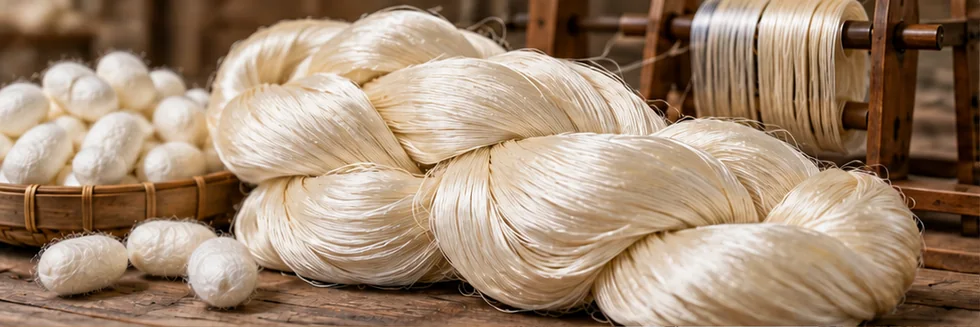
Raw Silk is reeled from cocoons into a thread containing fibroin and sericin. Denier, reelability, and cleanness determine important commercial differences. Cocoon selection, cooking, filament finding, reeling, and drying establish yarn quality. Raw reeled silk is not equivalent to spun silk made from shorter fibers or waste, and subsequent degumming can change the weight and behavior of the material.
Key Applications & Industrial Demand
Silk weaving, knitting, throwing, and specialty textile manufacture use reeled raw silk. Customers select thread size, evenness, cohesion, strength, and cleanliness for their machines. Fine visible fabrics can require particularly consistent yarn to avoid defects that become obvious after dyeing and finishing.
Key Factors Influencing Raw Silk Price Movements
- Cocoon Recovery: Cocoon supply, shell quality, reelability, labor, water, and heat determine the recovery and cost of continuous raw-silk filaments.
- Thread Quality: Denier consistency, cleanness, strength, and cohesion influence weaving reliability and the visible quality of silk fabrics.
- Gum and Processing: Fibroin-sericin balance, moisture, reeling control, degumming loss, and preparation requirements affect the quantity and performance delivered to a textile customer.
How to Interpret Raw Silk Pricing Data
Raw silk commonly trades per kilogram with denier, grade, conditioning, and delivery specified. Account for later degumming and processing losses when comparing usable yarn. Cocoon weight, spun silk, and finished silk fabric represent different stages and should not be equated by gross mass.
Further reading: FAO Silk Reeling and Testing Manual
Frequently Asked Questions About Raw silk
What Drives Price Changes for Raw Silk?
Cocoon harvests, reeling yield, labor, energy, silk-fabric orders, and inventory influence prices. Fine consistent reeled grades can remain scarce despite available lower-quality cocoons or silk waste.
How Do Quality or Specification Differences Affect Raw Silk Pricing?
Denier variation, cleanness, neatness, strength, cohesion, moisture, and defects matter. Spun silk is a different construction from continuous reeled raw silk.
Why Can Local Raw Silk Prices Differ From Global Benchmarks?
Sericulture access, reeling skill, testing, freight, duties, conditioning, and local weaving demand affect prices. Qualified consistent lots can reduce loom breaks and fabric rejection.