


Understanding PTFE Prices
Market Overview & Supply Chain Dynamics
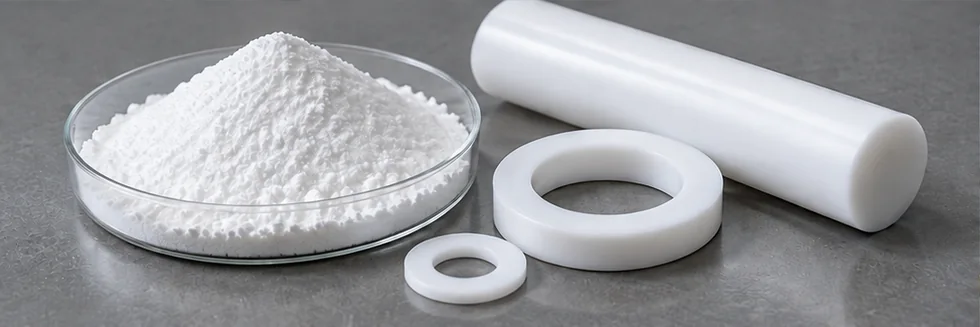
PTFE is a fluoropolymer distinguished by chemical inertness, low friction, and high melt viscosity. Conventional granular material is commonly compressed and fused by sintering, while fine-powder grades can serve paste extrusion. Aqueous dispersions are another commercial form. These processing routes are fundamentally different from routine injection molding, and they explain why PTFE grades cannot be valued only by fluoropolymer content.
Key Applications & Industrial Demand
Seals, gaskets, linings, wire insulation, tubing, bearings, and release surfaces use PTFE. Filled compounds improve selected wear or dimensional characteristics, while electrical and fine-extrusion applications require their own powder behavior and purity. The intended conversion process determines the suitable form.
Key Factors Influencing PTFE Price Movements
- Powder and Process Type: High melt viscosity requires specialized conversion, with sintering and paste extrusion grades demanding different particle characteristics and production control.
- Service Performance: Low friction, chemical inertness, filler content, and purity determine whether a product meets sealing, electrical, or chemical-processing requirements.
- Conversion Yield: Compaction, extrusion, sintering time, and machining losses affect finished-product economics, while qualified fluoropolymer supply can limit replacement options.
How to Interpret PTFE Pricing Data
PTFE is usually quoted per kilogram of powder, compound, or dispersion. Compare dry-polymer content for dispersions and distinguish granular from fine powder. Stock rods, sheets, and machined seals add sintering, machining, and scrap costs beyond the underlying polymer price.
Further reading: Daikin PTFE Fine-Powder Products
Frequently Asked Questions About PTFE
What drives price changes for PTFE?
Fluorochemical feedstocks, polymer capacity, energy, and industrial sealing or electrical demand influence prices. Fine-powder and dispersion supply can follow different conditions from granular resin.
How do quality or specification differences affect PTFE pricing?
Particle form, molecular structure, filler loading, purity, and extrusion behavior matter. Granular molding powder, fine powder, and aqueous dispersion are not equivalent purchases.
Why can local PTFE prices differ from global benchmarks?
Specialist distribution, import rules, freight, compounding, and machining capability influence prices. Finished seals and stock shapes include substantial conversion cost and yield loss.