


Understanding PP homopolymer injection grade Prices
Market Overview & Supply Chain Dynamics
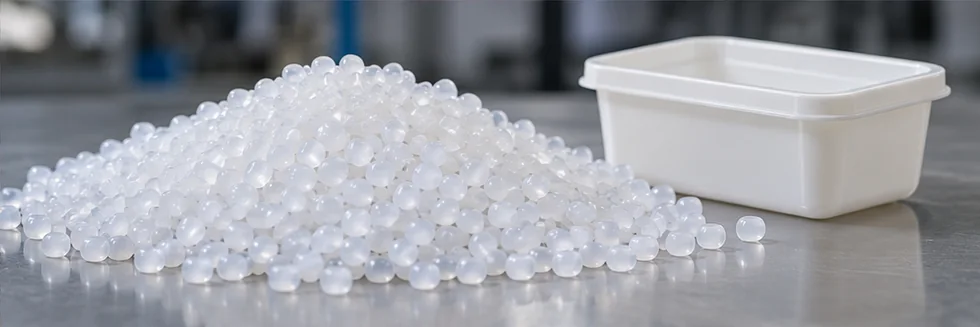
PP Homopolymer Injection Grade is a homopolymer selected for melt-flow rate, stiffness, nucleation, and heat resistance. It is generally purchased for rigid molded products where flow and cycle time must fit the tooling. Producers offer natural, clarified, nucleated, and stabilized variants, meaning that nominal polypropylene identity alone does not explain the value of a qualified molding grade.
Key Applications & Industrial Demand
Housewares, closures, thin-wall containers, appliance parts, and industrial molded goods use homopolymer PP. Converters choose resin according to part rigidity, surface quality, mold geometry, and thermal requirements. Applications requiring strong low-temperature impact may need a different polypropylene structure.
Key Factors Influencing PP Homopolymer Injection Grade Price Movements
- Propylene Economics: Propylene availability and polymerization operating rates influence homopolymer supply, while converter demand determines how quickly regional resin stocks are absorbed.
- Mold-Filling Performance: Melt-flow rate affects filling of thin or complex parts; stiffness and heat resistance must remain adequate at the chosen wall thickness.
- Crystallization Control: Nucleation, stabilization, and additive consistency influence cycle time, dimensions, and finish, creating premiums for molding grades approved on established tooling.
How to Interpret PP Homopolymer Injection Grade Pricing Data
PP resin prices commonly use kilograms or metric tons. Compare melt-flow rate at identical test conditions and identify additives or food-contact approvals. Resin that reduces molding cycle time or scrap can justify a premium over an otherwise similar general-purpose pellet.
Further reading: LyondellBasell Polypropylene Material Selection
Frequently Asked Questions About PP homopolymer injection grade
What drives price changes for PP Homopolymer Injection Grade?
Propylene costs, PP plant runs, packaging and houseware orders, and import inventory move prices. High-flow or specialty-additive grades can face different availability.
How do quality or specification differences affect PP Homopolymer Injection Grade pricing?
Flow rate, stiffness, impact balance, nucleation, stabilization, and approvals distinguish grades. A substitute can change cycle times, shrinkage, or the required part thickness.
Why can local PP Homopolymer Injection Grade prices differ from global benchmarks?
Warehouse availability, import duty, freight, bagging, credit, and local converter qualification affect delivered prices. Small lots usually carry higher distribution costs.