PL · Supplier Warsaw, Poland; EU supply offer, delivery quoted separatelyEUR / kg
1.44EUR / kg
10/24/2026First recorded (UTC)Last recorded by crawler:
Published bulk supplier offerCurrent price · Reference snapshotSeries detailsMaximum order kg exclusive: 3000Minimum order kg: 1000Product name: Native Potato StarchQuantity basis: EUR per kg of product at published minimum order; not bag totalSupply scope: EU supplier offer; not a national average or delivered priceSupplier offer not exchange settlementOrder quantity and delivery conditions apply
PL · Supplier Warsaw, Poland; EU supply offer, delivery quoted separatelyEUR / kg
1.35EUR / kg
10/24/2026First recorded (UTC)Last recorded by crawler:
Published bulk supplier offerCurrent price · Reference snapshotSeries detailsMaximum order kg exclusive: unbounded_by_published_tableMinimum order kg: 4000Product name: Native Potato StarchQuantity basis: EUR per kg of product at published minimum order; not bag totalSupply scope: EU supplier offer; not a national average or delivered priceSupplier offer not exchange settlementOrder quantity and delivery conditions apply
PL · Supplier Warsaw, Poland; EU supply offer, delivery quoted separatelyEUR / kg
1.38EUR / kg
10/24/2026First recorded (UTC)Last recorded by crawler:
Published bulk supplier offerCurrent price · Reference snapshotSeries detailsMaximum order kg exclusive: 4000Minimum order kg: 3000Product name: Native Potato StarchQuantity basis: EUR per kg of product at published minimum order; not bag totalSupply scope: EU supplier offer; not a national average or delivered priceSupplier offer not exchange settlementOrder quantity and delivery conditions apply
This is the latest available source quote. It has not been updated recently; the displayed quote time remains unchanged until a newer valid quote is available.
Price history
Each source has its own currency and unit · Sources may update at different intervals
large granules: Potato starch has characteristic relatively large granules.
paste clarity: Clarity can matter in food formulations.
swelling power: Granule swelling contributes to thickening behavior.
drying: Recovered wet starch must be dried for powder distribution.
Understanding Potato starch Prices
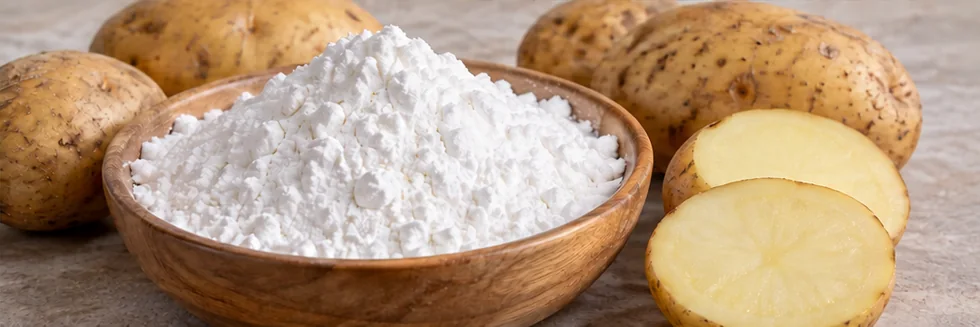
Illustrative image for the Potato Starch market guide.
Market Overview & Supply Chain Dynamics
Potato Starch is recovered by rasping tubers, separating fiber, washing starch, and drying the wet product. Tuber starch yield controls recovery from the crop. Large granules, swelling power, and paste clarity create functionality distinct from other native starches, helping explain why buyers may pay a premium despite a broader market for inexpensive starch ingredients.
Key Applications & Industrial Demand
Noodles, sauces, soups, processed foods, paper, and technical formulations use potato starch for selected texture or binding properties. Native and modified potato starches serve different heat, shear, and storage conditions.
Potato Recovery: Tuber starch yield, harvest condition, factory extraction, and drying energy determine powder output and production costs.
Functional Performance: Large granules, swelling power, and paste clarity influence texture and formulation performance relative to corn or tapioca starch.
Processing Season: Crop campaigns, factory capacity, stocks, and demand from food and technical buyers affect availability between harvests.
How to Interpret Potato Starch Pricing Data
Compare price per kilogram or metric ton for the declared native or modified grade and moisture. Assess thickening performance, clarity, and application approval before substituting another botanical starch. Food-grade packing and shipment format also affect the delivered cost.