


Understanding Lead-acid battery scrap Prices
Market Overview & Supply Chain Dynamics
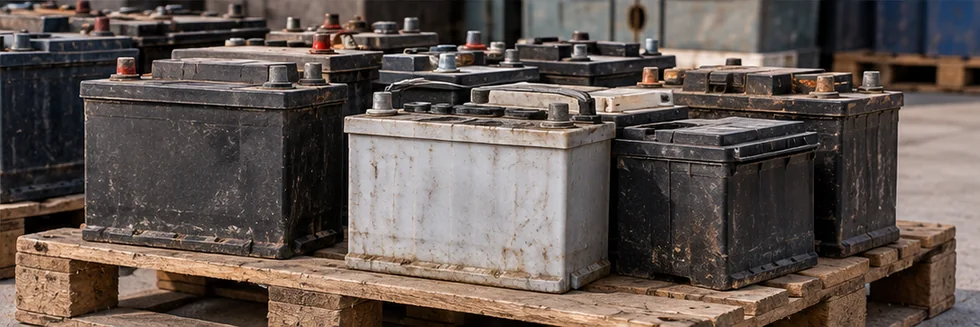
Lead-Acid Battery Scrap is a whole battery feedstock containing lead-bearing material, electrolyte, and often a polypropylene case. Lead recovery requires specialist processing rather than ordinary mixed-metal melting. An authorized recycler's acceptance conditions govern the commercial route. British pound-per-kilogram merchant bids refer to the accepted battery mass, which includes more than lead and must not be treated as a refined-lead quotation.
Key Applications & Industrial Demand
Vehicle maintenance, industrial backup power, telecommunications, and other battery users generate spent units for regulated collection. Secondary lead producers provide an outlet for suitable feedstock, while recovered plastics follow another recycling stream. Lithium-ion and other battery chemistries are separate products with different processing and handling requirements.
Key Factors Influencing Lead-Acid Battery Scrap Price Movements
- Battery Composition and Recovery: Whole battery construction, lead-bearing components, electrolyte content, polypropylene case, and contamination influence recoverable outputs and processing expense.
- Lead Market and Recycler Capacity: Secondary lead demand, refined-lead values, collection supply, smelter capacity, and operating costs affect the purchase value available for spent batteries.
- Regulated Collection and Delivery: Authorized recycler access, accepted battery types, packaging, transport, documentation, and environmental controls contribute costs beyond the contained-metal value.
How to Interpret Lead-Acid Battery Scrap Pricing Data
Read pounds per accepted kilogram of lead-acid batteries and identify collection or delivered terms. Gross weight cannot be multiplied by a refined-lead price because recovery, nonlead components, and treatment costs intervene. Damaged or mixed-chemistry loads can have different acceptance conditions. Local environmental and transport requirements form part of the recycling service and commercial cost.
Further reading: US EPA: Lead-Acid Battery Recycling Basel Convention: Waste Battery Technical Guidelines
Frequently Asked Questions About Lead-acid battery scrap
What Drives Price Changes for Lead-Acid Battery Scrap?
Lead demand, recycler capacity, collection volumes, recovery costs, and regulated transport influence bids. Whole-battery composition and acceptance can change the value of a specific consignment.
How Do Quality or Specification Differences Affect Lead-Acid Battery Scrap Pricing?
Compare battery chemistry, accepted construction, contamination, damage, and whole-unit weight basis. Lead-acid feedstock must be separated from other battery chemistries in commercial comparisons.
Why Can Local Lead-Acid Battery Scrap Prices Differ From Global Benchmarks?
Authorized recycling capacity, collection networks, transport rules, environmental controls, and lead-market access differ. Local merchant bids also recover the cost of moving regulated batteries to a suitable processor.