


Understanding Kraftliner Prices
Market Overview & Supply Chain Dynamics
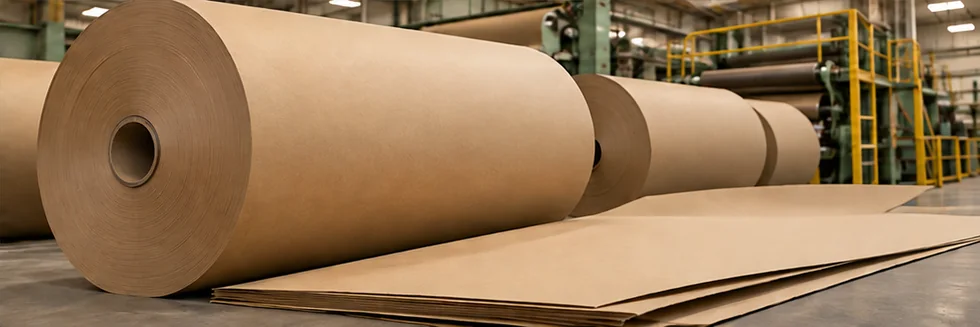
Kraftliner is containerboard made predominantly from primary fibers for the outer or inner faces of corrugated board. Basis weight, burst strength, compression strength, and water absorption define commercial grades. Integrated pulp-and-paper production can supply the furnish directly, while other mills buy pulp. White-top and brown liners have different surface constructions and appearance requirements.
Key Applications & Industrial Demand
Corrugated-box makers use kraftliner where strength, durability, and suitable printing surfaces matter. Heavy-duty, export, agricultural, and moisture-exposed packaging may call for specific grades. Box performance also depends on fluting, design, conversion, and storage conditions rather than liner alone.
Key Factors Influencing Kraftliner Price Movements
- Fiber and Energy Costs: Primary fibers, chemicals, power, steam, and paper-machine utilization influence kraftliner manufacturing cost and merchant availability.
- Packaging Strength: Basis weight, burst strength, and compression strength determine what a liner contributes to a corrugated structure and its handling requirements.
- Moisture and Surface Grade: Water absorption, sizing, white-top construction, printability, and humidity performance create separate product tiers and customer approvals.
How to Interpret Kraftliner Pricing Data
Kraftliner commonly trades per metric ton in reels. Compare grammage, strength tests, moisture behavior, width, roll size, and brown or white-top grade. Testliner is a related liner family with a different furnish, while a finished box includes corrugating and conversion.
Further reading: FEFCO Containerboard Production
Frequently Asked Questions About Kraftliner
What Drives Price Changes for Kraftliner?
Pulp, energy, mill runs, corrugated packaging demand, inventories, and freight influence prices. Strong export-packaging requirements can support certain high-strength liner grades.
How Do Quality or Specification Differences Affect Kraftliner Pricing?
Grammage, burst, compression, moisture, Cobb absorption, surface, and defects matter. Reducing basis weight without equivalent strength can change the box's carrying performance.
Why Can Local Kraftliner Prices Differ From Global Benchmarks?
Reel freight, duties, local mill access, roll widths, inventories, and corrugator demand affect prices. Trim efficiency and moisture exposure can alter the cost of usable liner area.